Home Offices That Break Every Rule and Still Work
By Maya Bennett, Founder & Editor. Every home office guide tells you the same things: face the wall, buy a proper chair, keep the colours calm, and push the desk against the wall. This office does the opposite, on purpose, and it still works. The desk faces the room, there is no chair at the desk, the colours clash, and the desk floats in the middle of the floor. Each broken rule is shown in its own scene below, with the reason it works spelled out. A generic good looking setup does not belong here. Every scene breaks something real. For more room ideas, browse the Home Office Ideas collection on desk and glow.
As an Amazon Associate I earn from qualifying purchases. Read our affiliate disclosure for details.
In this guide
Rule one: the desk faces the room
Rule two: no chair at all
Rule three: colours that clash
Rule four: the desk floats
FAQ
Conclusion
At a glance: the rules, broken
| Rule | What breaks it | Why it still works |
|---|---|---|
| Face the wall | The desk faces the room | You see the room, not a blank wall |
| Buy a proper chair | No chair, a standing desk and a mat | Standing, with a stool for breaks |
| Keep colours calm | Green velvet against a bold rug | Two strong colours, one plain desk |
| Push the desk to the wall | The desk floats mid room | Cables hidden, shelf behind it |
One honest note before we start: breaking a rule on purpose is not the same as ignoring it. Each scene below names the rule it breaks and the reason it still works. Copy the reason, not just the look.
Rule one broken: the desk faces the room
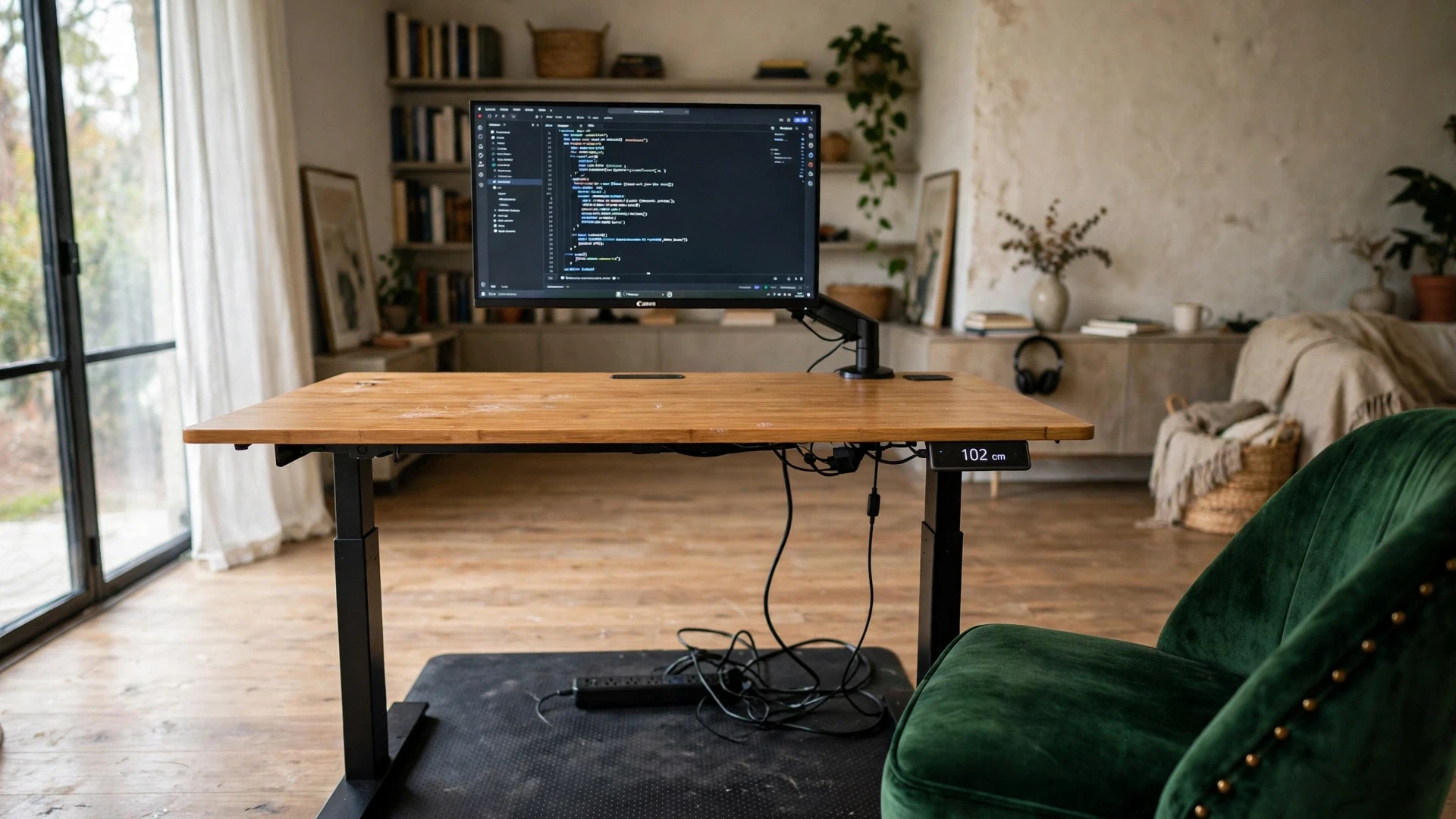
The rule says face the wall, so your back is to the room and nothing distracts you. This desk does the opposite. A bamboo electric standing desk stands in the middle of the room, facing away from the wall and into the room, with a monitor on a black arm and no chair in sight. You see the whole room while you work: the door, the window light, the shelf behind you. It should feel exposed. Instead it feels open, because the desk is the anchor and the room is arranged around it, not behind it.
Why it works is simple. The monitor is on an arm, so it sits at eye level and the desk top stays clear. The power strip lives under the desk, so the cables never trail across the floor where anyone walks. And the desk is a standing desk, so the height can change through the day without moving the furniture. Facing the room only fails when the desk is a mess. Keep it tidy, and the view becomes the point.
THE DESK
FlexiSpot E6 Bamboo 3-Stage Dual Motor Electric Standing Desk 55 x 28, Solid Bamboo Desktop and White Frame
Why this one: A 55 by 28 inch bamboo standing desk with dual motors and memory presets, so the height changes with one touch and the desk works sitting or standing.
Worth knowing: At 55 inches wide it needs real floor space, so measure the middle of the room before you float it there.
THE SCREEN
Amazon Basics 24-inch Full HD IPS Monitor, 75 Hz, 1080P, HDMI, Display Port and VGA Input, Adjustable Stand, VESA Compatible, Built-in Speakers for Office and Home, Black
Why this one: A 24 inch monitor with built in speakers that mounts cleanly on the arm, so the desk top stays clear.
Worth knowing: Built in speakers suit calls and video, not music at high volume.
THE ARM
MOUNTUP Single Monitor Desk Mount, Adjustable Gas Spring Monitor Arm, up to 32 inch, Black
Why this one: A gas spring arm that holds the monitor at eye level and frees the whole desk top, which matters when the desk faces the room.
Worth knowing: The arm clamps to the desk edge, so check the desk edge thickness before you mount it.
THE POWER
Belkin Surge Protector Power Strip, 6 AC Multiple Outlets, Flat Rotating Plug, 8ft Long Heavy-Duty Extension Cord for Home, Office, Travel, Computer Desktop and Charging Brick, White
Why this one: A 6 outlet surge protector with an 8 foot cord that feeds the monitor, the desk motors, and a charger from under the desk.
Worth knowing: The strip is wide, so check it fits under the desk before you route the cables.
Rule two broken: no chair at all
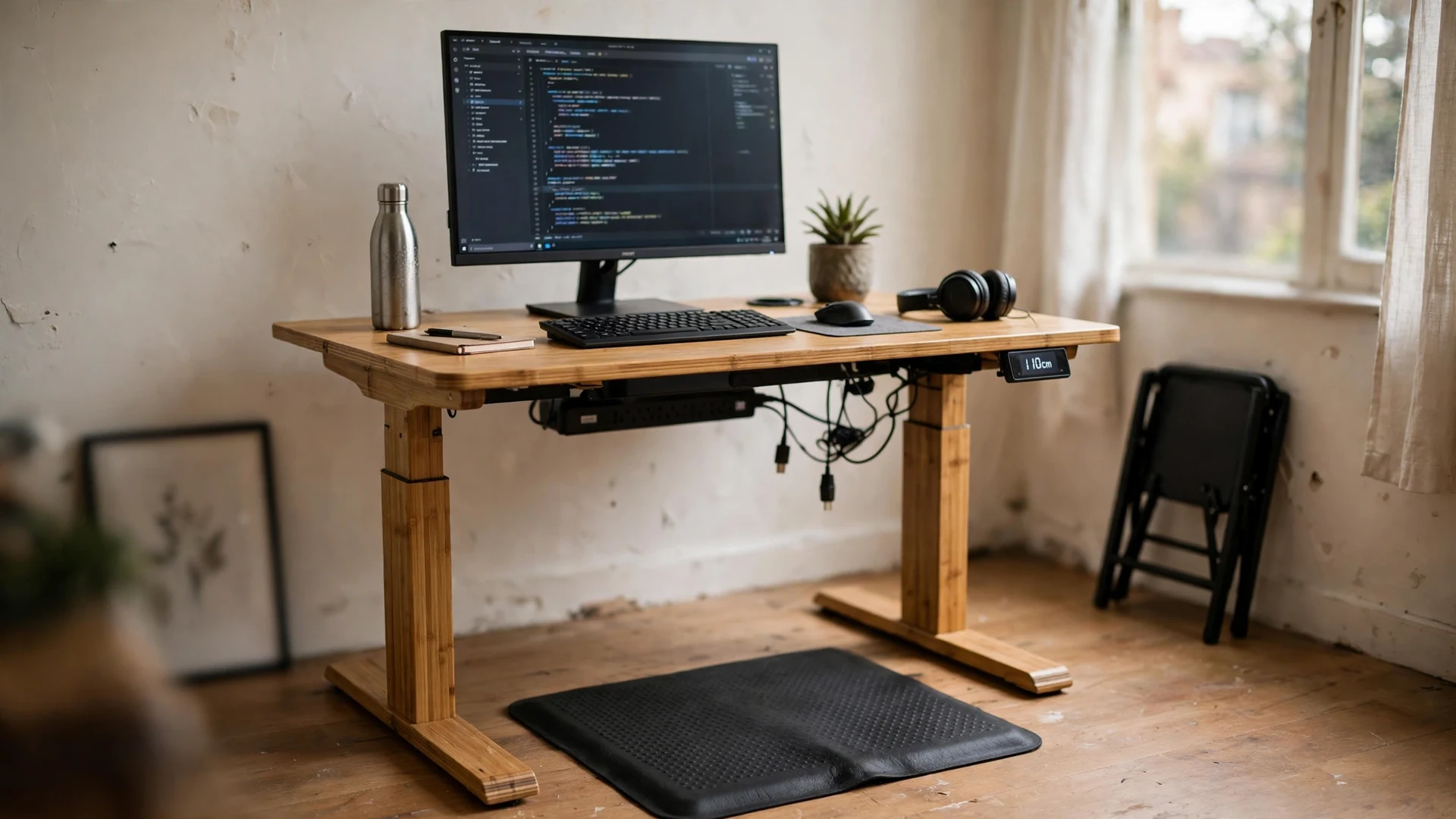
The rule says buy a proper chair. This desk has none. The standing desk is raised to standing height, a black anti-fatigue mat sits on the floor where the chair would be, and a folding stool leans against the wall for breaks. You stand to work, you sit on the stool to rest, and the chair that every guide insists on is simply not there. It works because the desk adjusts: lower it, and the stool becomes the seat. Raise it, and the mat becomes the floor.
The mat is the piece that makes it honest. Standing on a hard floor all day is not a setup, it is a punishment. The mat gives the feet something soft, and the stool gives the legs a break without needing a full chair. If you try this, keep the stool within reach. A standing desk with nowhere to sit is a desk you will abandon by lunch. For more small desk ideas, browse the Home Office Ideas collection.
THE MAT
Topo Standing Desk Mat by Ergodriven, Obsidian Black
Why this one: A standing desk mat with a raised edge and a massage mound that gives standing feet somewhere soft to stand.
Worth knowing: The mat is wider than a flat mat, so check it fits the floor space in front of the desk.
THE STOOL
Lavish Home Folding Counter Height Stool, 24 Inch, Black
Why this one: A 24 inch folding stool that leans against the wall when you stand and pulls up to the desk when you want to sit.
Worth knowing: It folds flat, which is handy, but it has no back, so it suits short sits, not full work days.
Rule three broken: colours that should clash
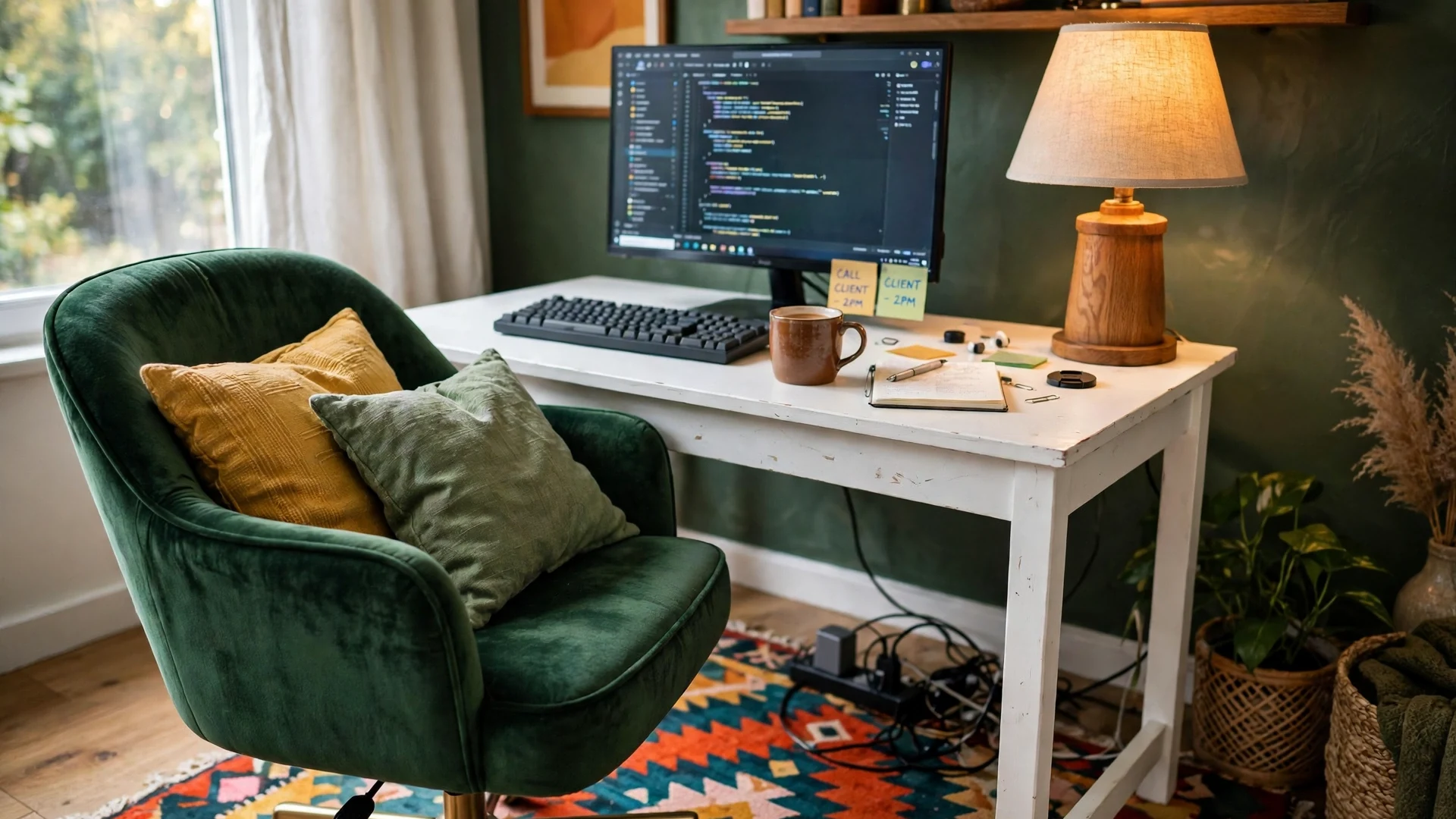
The rule says keep the colours calm: white, gray, wood, and nothing loud. This scene breaks it twice. A deep green velvet swivel chair sits at a white desk, and a bold patterned rug runs underneath it. Green against pattern, velvet against plain white, and it works. The reason is restraint everywhere else. The desk is plain white, the monitor is black, and the lamp is simple wood. Two strong colours get the whole stage, and nothing else competes with them.
The trap is adding a third loud piece. A red lamp, a yellow shelf, a blue cushion, and the room falls apart. Pick two strong colours, keep everything else plain, and let the clash be the design. If the chair is the statement, the rug is the echo, and the desk stays quiet. That is the whole trick, and it is the only reason this scene belongs in the guide.
THE CLASHING CHAIR
LOVSPATIO Home Office Chair, Velvet Swivel Adjustable Accent Vanity Chair, Verdant Green
Why this one: A verdant green velvet swivel chair that is the one loud piece in the room, and the reason the scene works.
Worth knowing: Velvet shows marks and dust, so keep it away from the desk edge where pens and coffee live.
Rule four broken: the desk floats in the middle
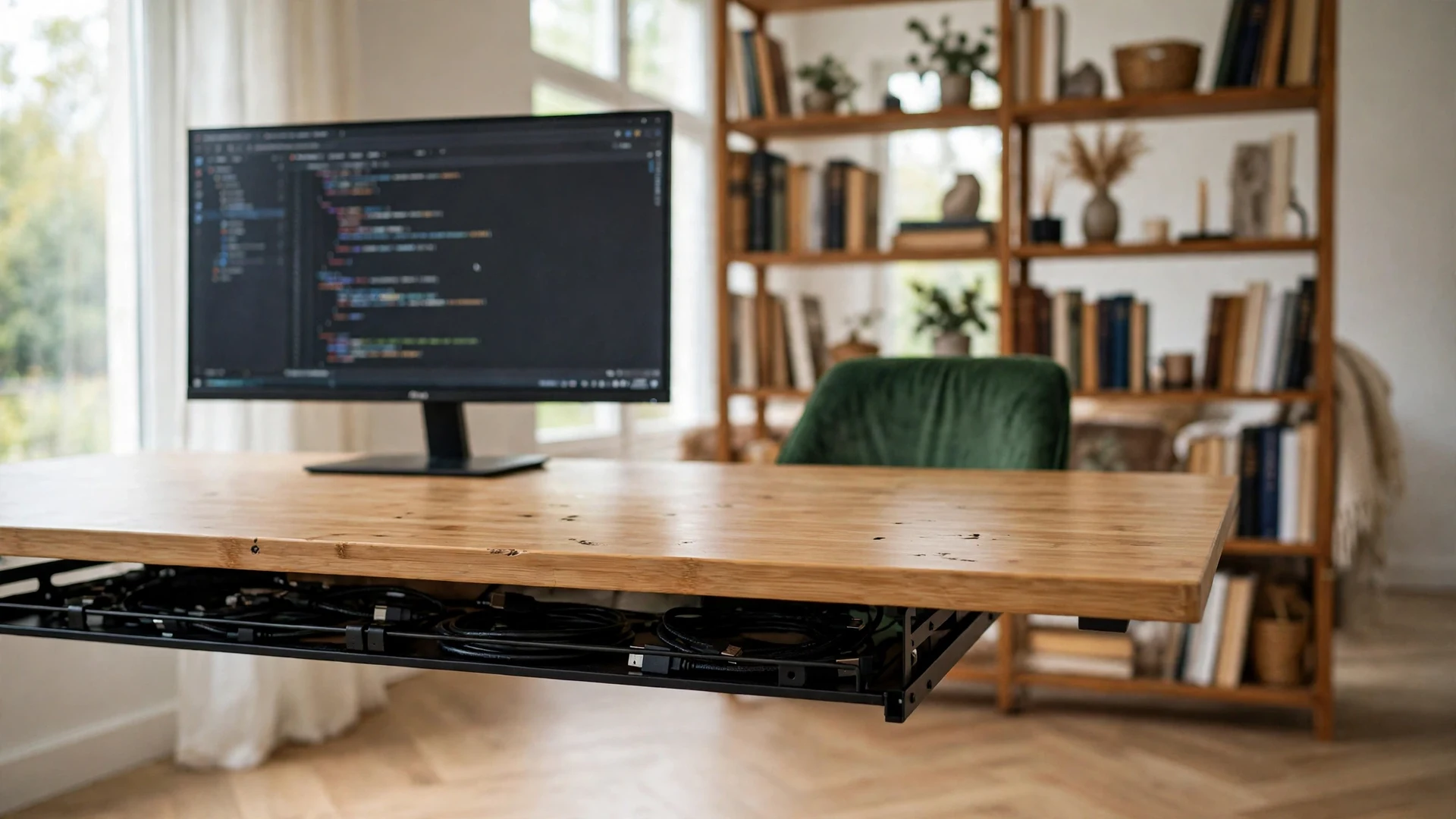
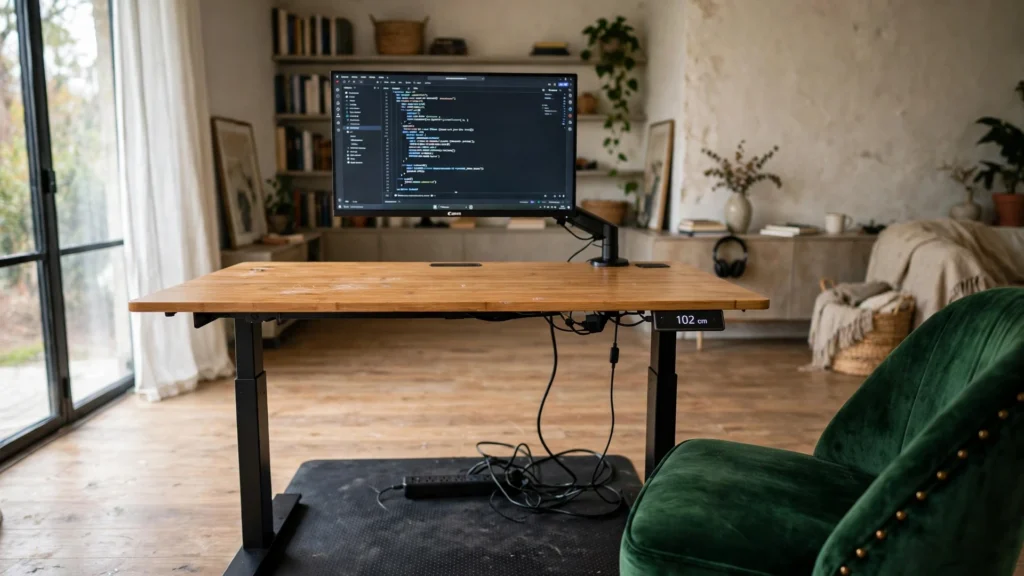
The rule says push the desk against the wall, so the room keeps its floor space. This desk floats in the middle of the room, with its back to the camera and a bookshelf behind it acting as a room divider. The cables are hidden in a tray under the desktop, so the back of the desk is as tidy as the front. A green velvet chair sits on the far side, facing the room, and the shelf behind the desk holds books and boxes instead of a wall holding nothing.
Floating only works if the back of the desk is finished. A desk pushed to the wall can hide its cables against the skirting board. A floating desk cannot hide anything, so the tray, the strip, and the tidy shelf are not extras. They are the setup. If the back of your desk is a tangle, do not float it. Fix the back first, then move the desk.
Try this: Stand behind your desk and look at it the way a visitor would. If the back is tidy enough to show, the desk can float. If not, fix the cables first.
Frequently asked questions
Will breaking the rules make my office look messy?
Only if the break has no reason behind it. Each scene here breaks one rule and keeps everything else tidy. Copy the reason, not just the look, and the room stays intentional.
Can I break all four rules in one office?
Yes, and this guide does. The desk faces the room, floats mid floor, has no chair, and wears clashing colours. It works because the cables are hidden, the desk is adjustable, and the plain pieces outnumber the loud ones.
Is a standing desk without a chair practical?
For standing work, yes, with a mat underfoot and a stool nearby for breaks. Lower the desk and the stool becomes the seat, so the setup covers both sitting and standing.
How do I keep a floating desk tidy?
Hide the cables in a tray under the desktop, keep the power strip under the desk, and put a shelf behind the desk as a divider. The back of the desk is on show, so it has to be finished.
Do clashing colours really work, or is it just a photo trick?
They work when two strong colours get the stage and everything else stays plain. Add a third loud piece and the room falls apart, so pick two and stop there.
Does any of this cost nothing?
No. Breaking rules is about layout and colour, not about spending nothing. The desk, the mat, the chair, and the arm are real buys, and each one is linked above with a price check.
Conclusion
Home office rules are useful, until they are not. Face the wall, buy a proper chair, keep the colours calm, push the desk to the wall. Each one is good advice for someone, and each one can be broken on purpose when you know why. Face the room and keep the desk tidy. Skip the chair and stand on a mat with a stool nearby. Clash two colours and keep everything else plain. Float the desk and finish its back. Break the rule, keep the reason, and the office still works. For more ideas to shape the rest of your workspace, browse the Home Office Ideas collection.
