How to Set Up a Home Office in a Closet Step by Step
A spare closet is one of the best small office spots in a home. It already has walls, a door you can close, and a place for everything to hide at the end of the day. This guide builds it step by step, in the order that avoids rework: measure first, mount the desk, add light, then storage, seating, and power. Follow the steps in order and you will have a real workstation, not a desk squeezed into a cupboard. Start with the Home Office Ideas collection for more small room setups once the build is done.
As an Amazon Associate I earn from qualifying purchases. Please read the affiliate disclosure for details.
In This Guide
At a Glance
| Step | What It Does |
|---|---|
| Step 1: Measure the Closet and Plan the Layout | Measure width, depth, and height, then sketch where the desk, screen, and chair will sit. |
| Step 2: Mount the Fold-Down Desk | A fold-down wall desk gives you a real work surface that folds away when the day ends. |
| Step 3: Add Light Inside the Closet | Motion sensor light bars switch on when you open the door and off when you leave. |
| Step 4: Hang a Pegboard for Tools and Supplies | A pegboard turns dead wall space into flexible storage for everything you reach for. |
| Step 5: Add Floating Shelves Above the Desk | Floating shelves hold books and bins up high, keeping the desk surface free. |
| Step 6: Roll In a Slim Chair That Fits | A slim chair with flip-up arms slides under the desk so the closet can close. |
| Step 7: Power It Safely and Test the Whole Setup | One surge protected strip powers everything, then test a full workday before you call it done. |
Step 1: Measure the Closet and Plan the Layout
AI-generated image
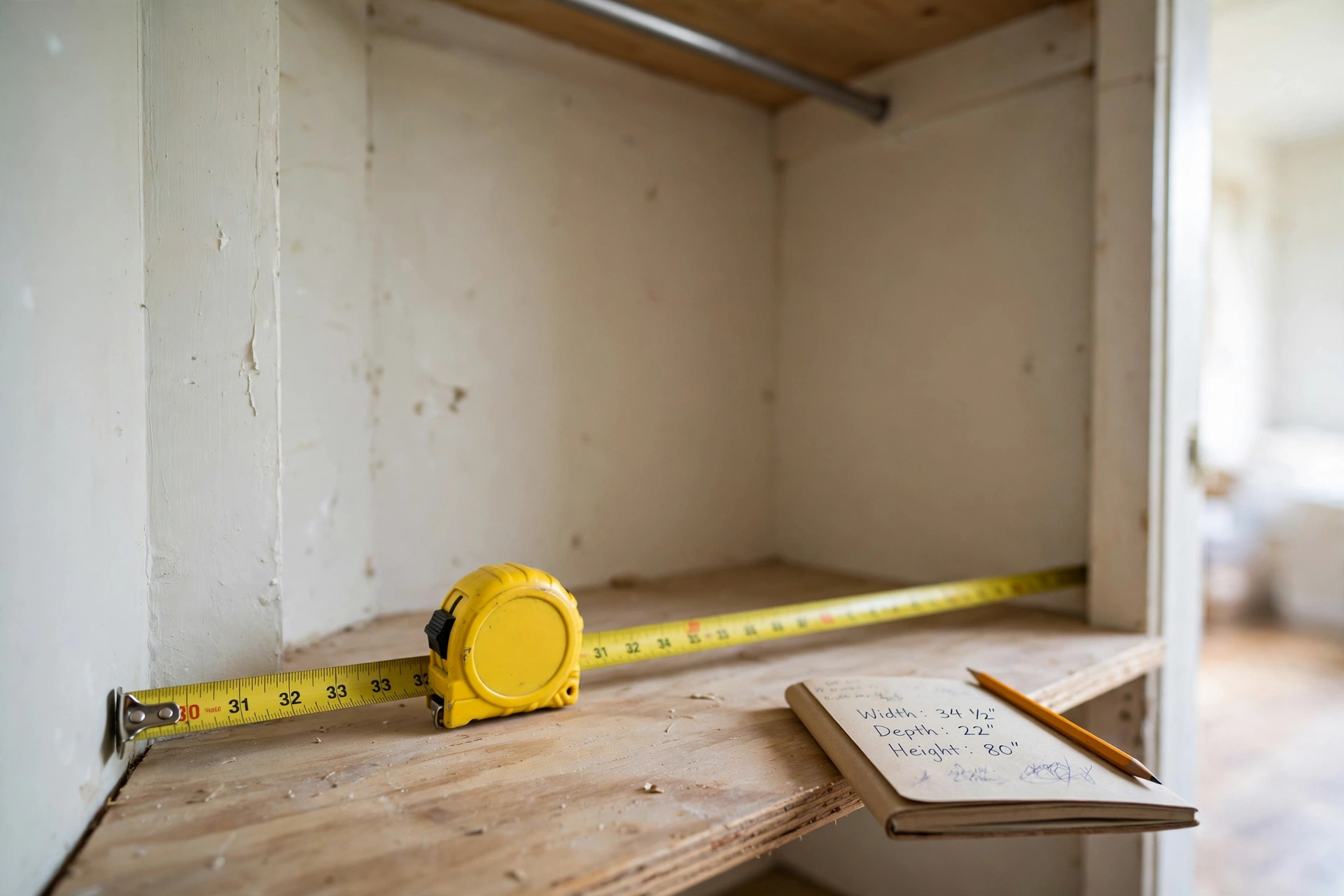
Every closet build starts with a tape measure, not a shopping list. Measure the width at the front and the back, because old closets are rarely square. Measure the depth from the back wall to the door frame, and the height to the shelf or rod you plan to keep.
- Desk zone: at least 30 inches wide for a laptop, more for a monitor.
- Leg room: 24 inches of clear depth under the desk.
- Chair space: room to pull out and sit without hitting the door frame.
Sketch the layout on paper and mark where the power outlet sits. If the outlet is behind the desk, plan the cable route now, before anything is mounted.
Step 2: Mount the Fold-Down Desk
AI-generated image
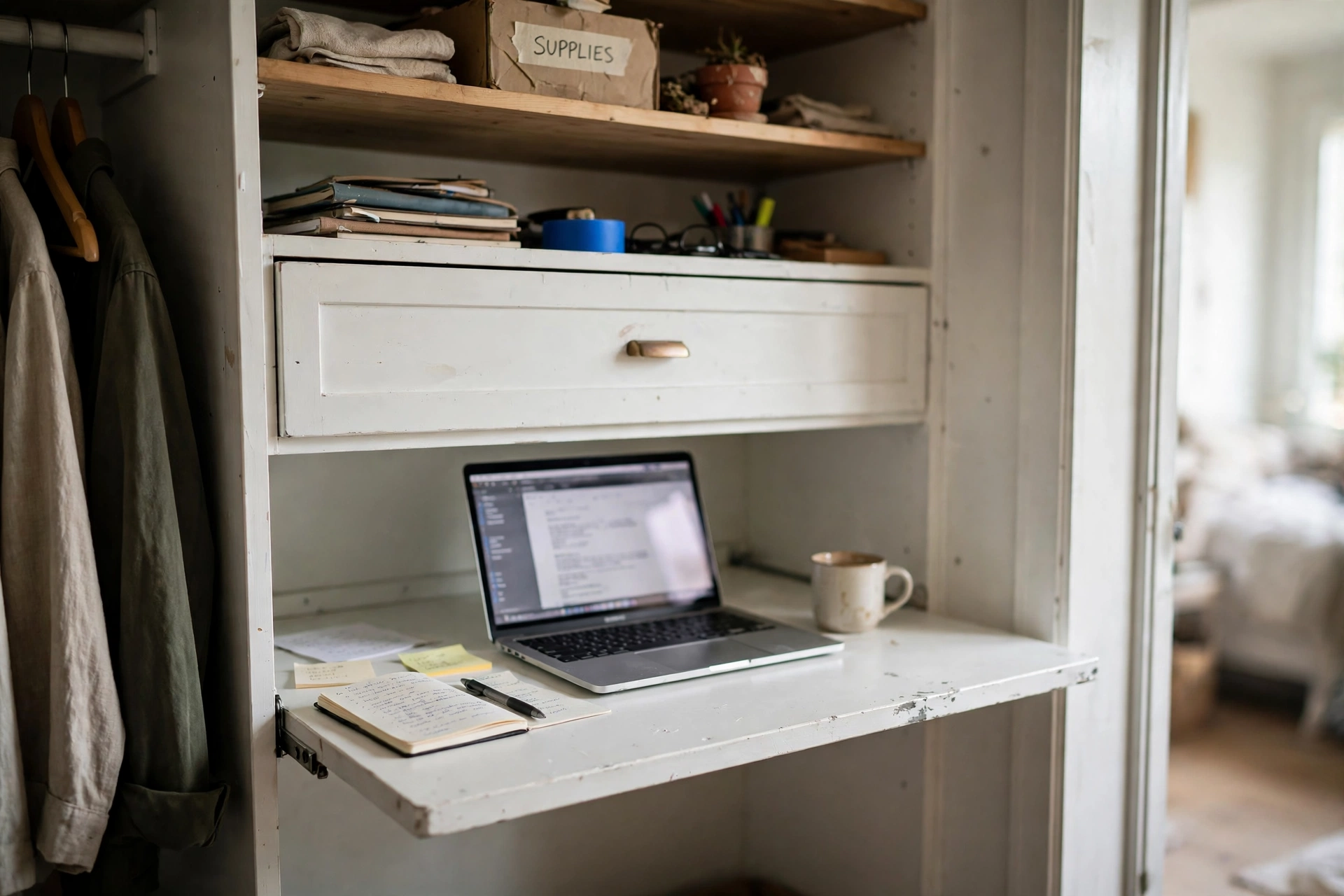
The desk is the heart of the build, and in a closet it should fold away. A wall mounted fold-down desk gives you a full work surface during the day and a flat cabinet at night.
Find the studs first with a stud finder, because a fold-down desk must anchor into solid wood, not plasterboard alone. Mark the height so the desktop sits at elbow height when you sit, usually around 29 to 30 inches from the floor. Fix the unit level, test the fold mechanism twice, and only then load it with a monitor and books. The built in shelves and drawer hold the things you reach for most, so the desktop stays clear for work.
Tangkula Folding Wall Table, Floating Desk with Storage Drawer and Shelves, White
Why this one: The fold-down top gives a real work surface that closes flat, the drawer and shelves hold daily supplies, and the white finish keeps a small closet feeling bright.
Worth knowing: It needs solid wall anchors and assembly, the desktop weight limit is modest, and the fixed shelves suit small items better than tall books.
Step 3: Add Light Inside the Closet
AI-generated image
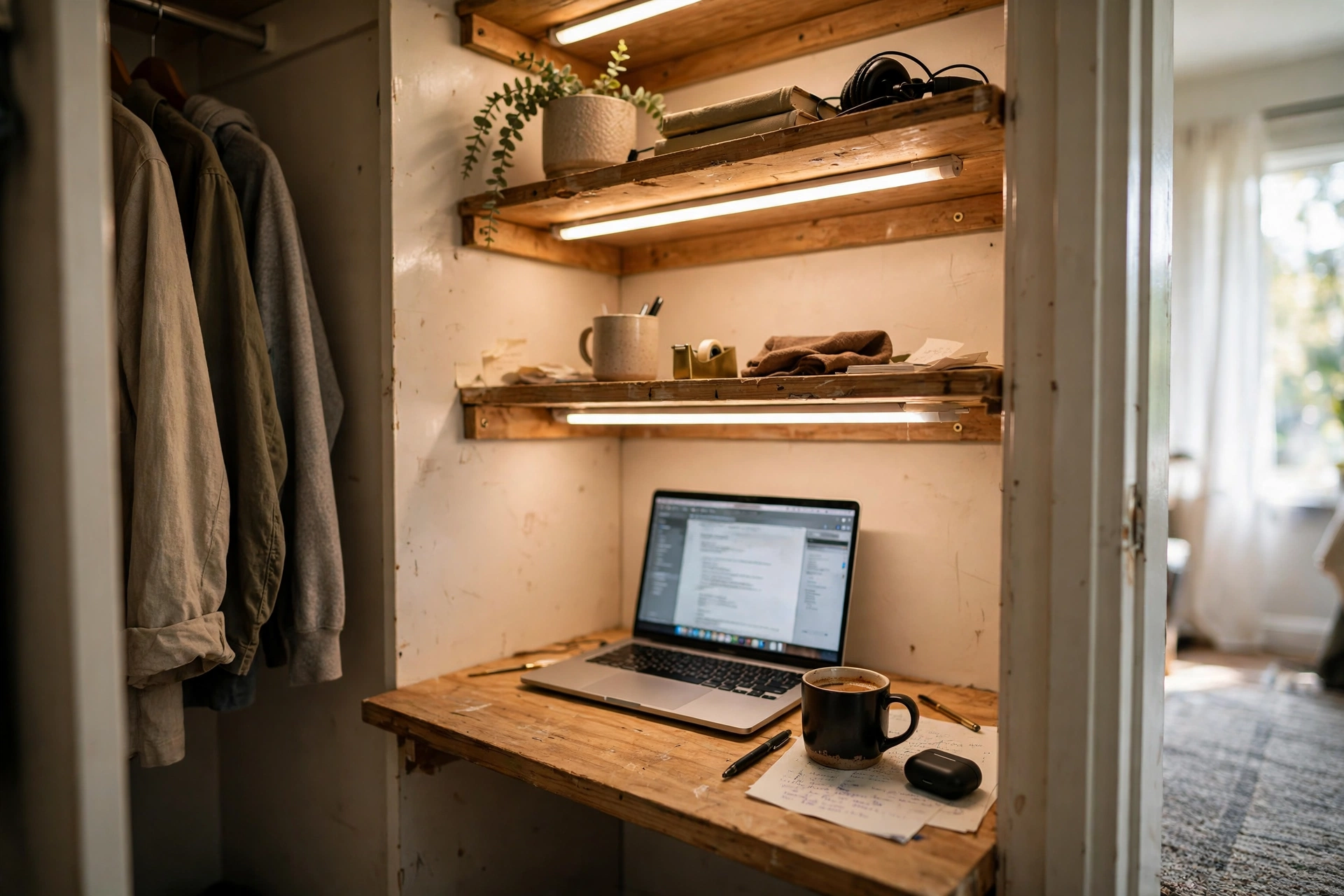
Closets are dark by design, so light comes before decoration. You need light that turns on by itself, because your hands will be full when you open the door.
Tip: Mount one bar under the top shelf and one under the desk shelf if you have two levels. Two small bars beat one bright bar, because they remove the shadow your own body casts across the desk.
Stick-on bars with a motion sensor are the easy route. They run on batteries or USB, they swivel to aim the beam, and they switch off on their own, so you never leave the closet glowing all night.
Why this one: Two swivel bars in one pack cover two shelf levels, the motion sensor switches them on as you open the door, and they run on batteries or USB.
Worth knowing: Batteries are not included, and the light is a single fixed tone, so it will not match a warmer desk lamp exactly.
Step 4: Hang a Pegboard for Tools and Supplies
AI-generated image
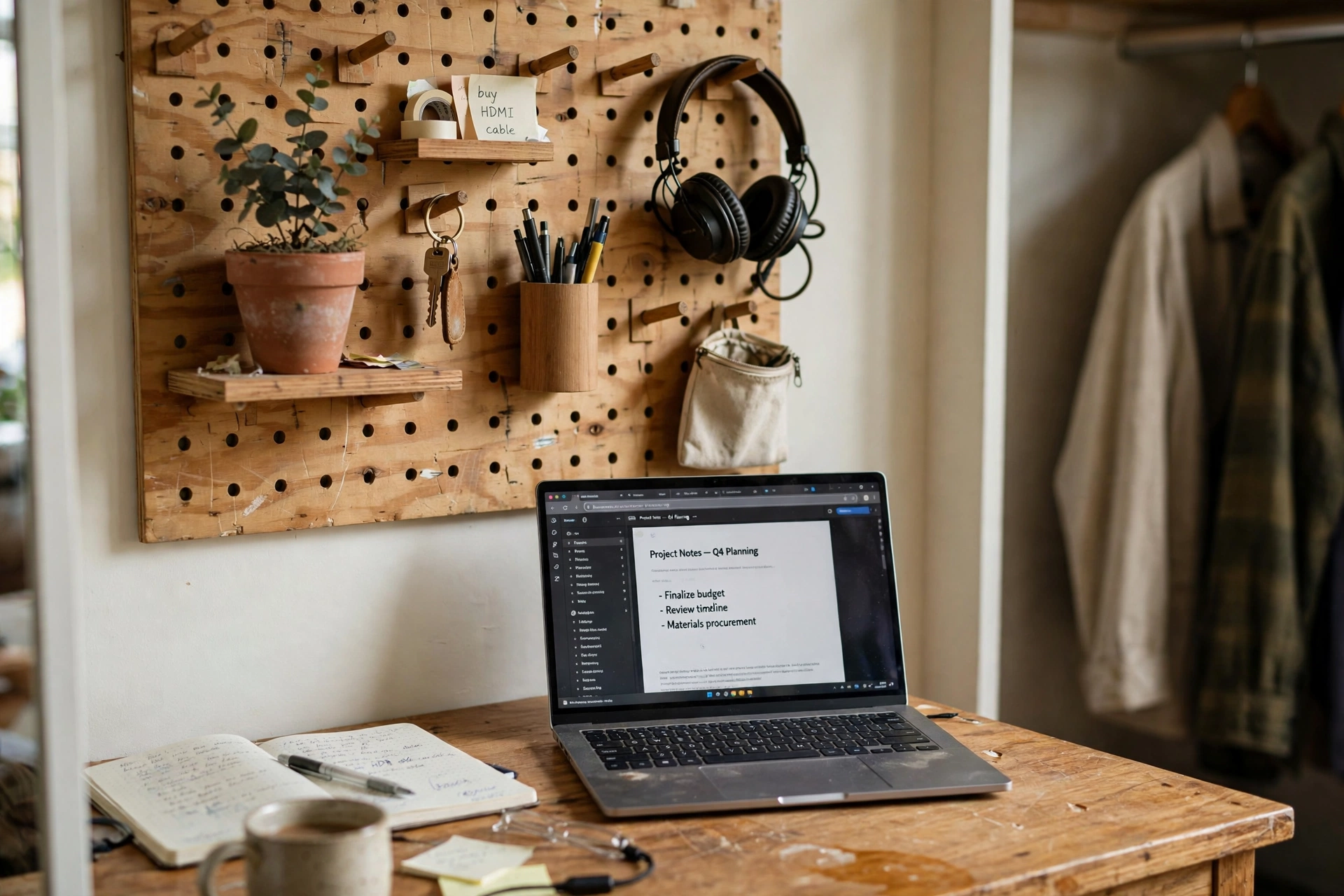
The wall above the desk is free real estate in a closet. A pegboard turns it into storage that you can rearrange as your work changes.
Mount the board into studs or with proper wall anchors, then hang shelves and hooks where your hands naturally fall. Scissors, headphones, cables, and small boxes go on hooks. Notebooks and a small plant go on the shelves. Keep the centre of the board clear at eye level, because that is where your monitor sits, and a busy board behind a screen is tiring to look at all day.
Why this one: Four panels with shelves and hooks cover a wide wall in one kit, the two tone wood looks warm against white closet walls, and hooks move in seconds when your setup changes.
Worth knowing: Each shelf holds only light items, so keep heavy books on a fixed shelf, and the panels need careful levelling or the rows will look tilted.
Step 5: Add Floating Shelves Above the Desk
AI-generated image
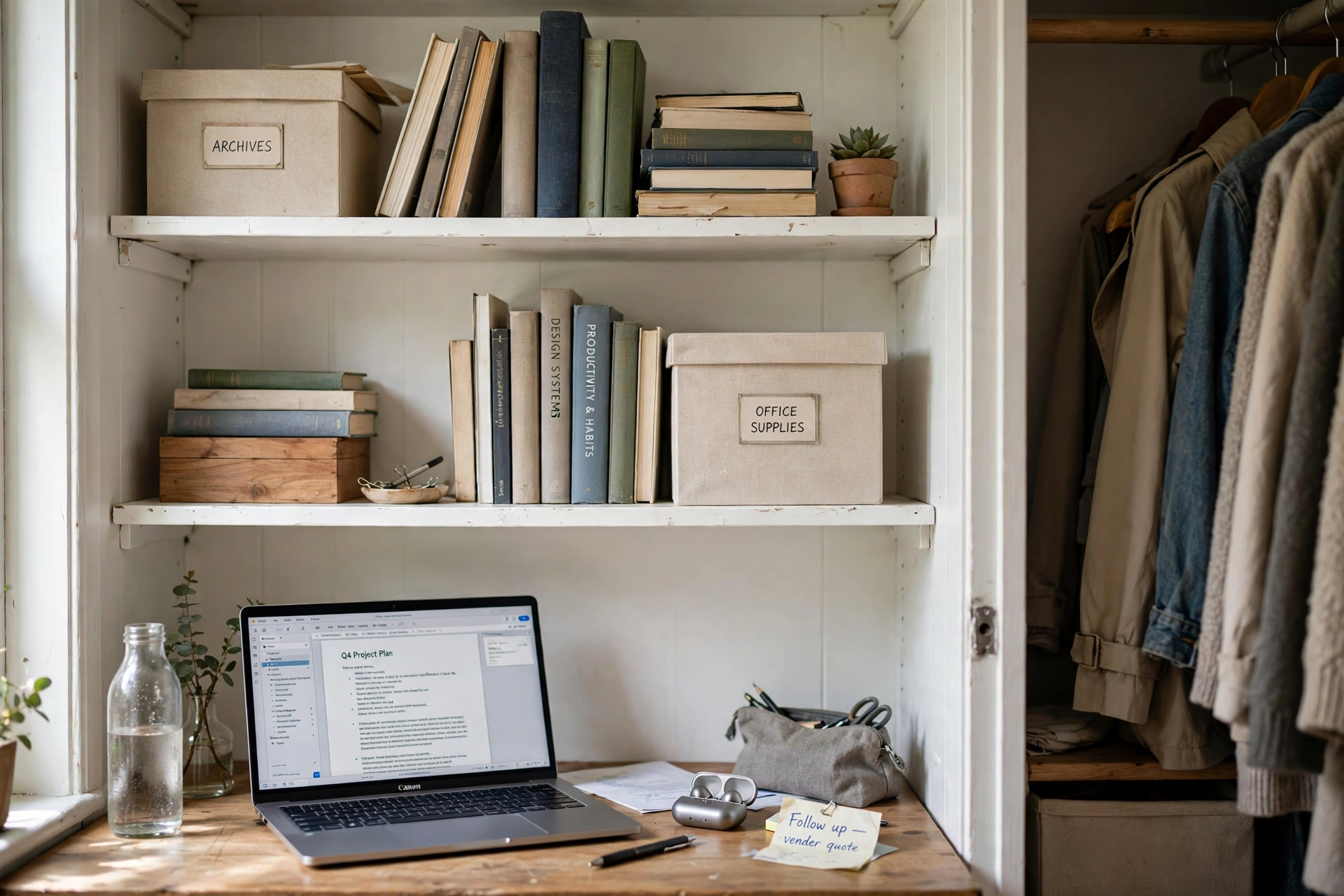
With the desk and pegboard in place, look up. The wall above the pegboard usually has room for one or two floating shelves, and that is where books, archive boxes, and reference binders belong.
- Mark the shelf height so the lowest shelf clears your monitor by a few inches.
- Fix the brackets into studs and check them with a level.
- Load the heaviest items nearest the brackets, not at the shelf ends.
Keep the shelves shallow. A deep shelf in a closet crowds the space and blocks light. Fifteen inch shelves hold books and small bins without stealing headroom.
Why this one: Three white shelves in graduated lengths fit a closet wall neatly, the metal brackets hold books and bins securely, and the white finish keeps the space feeling open.
Worth knowing: Each shelf holds up to 22 pounds, so keep heavy binders low and spread, and the boards are engineered wood, not solid timber.
Step 6: Roll In a Slim Chair That Fits
AI-generated image
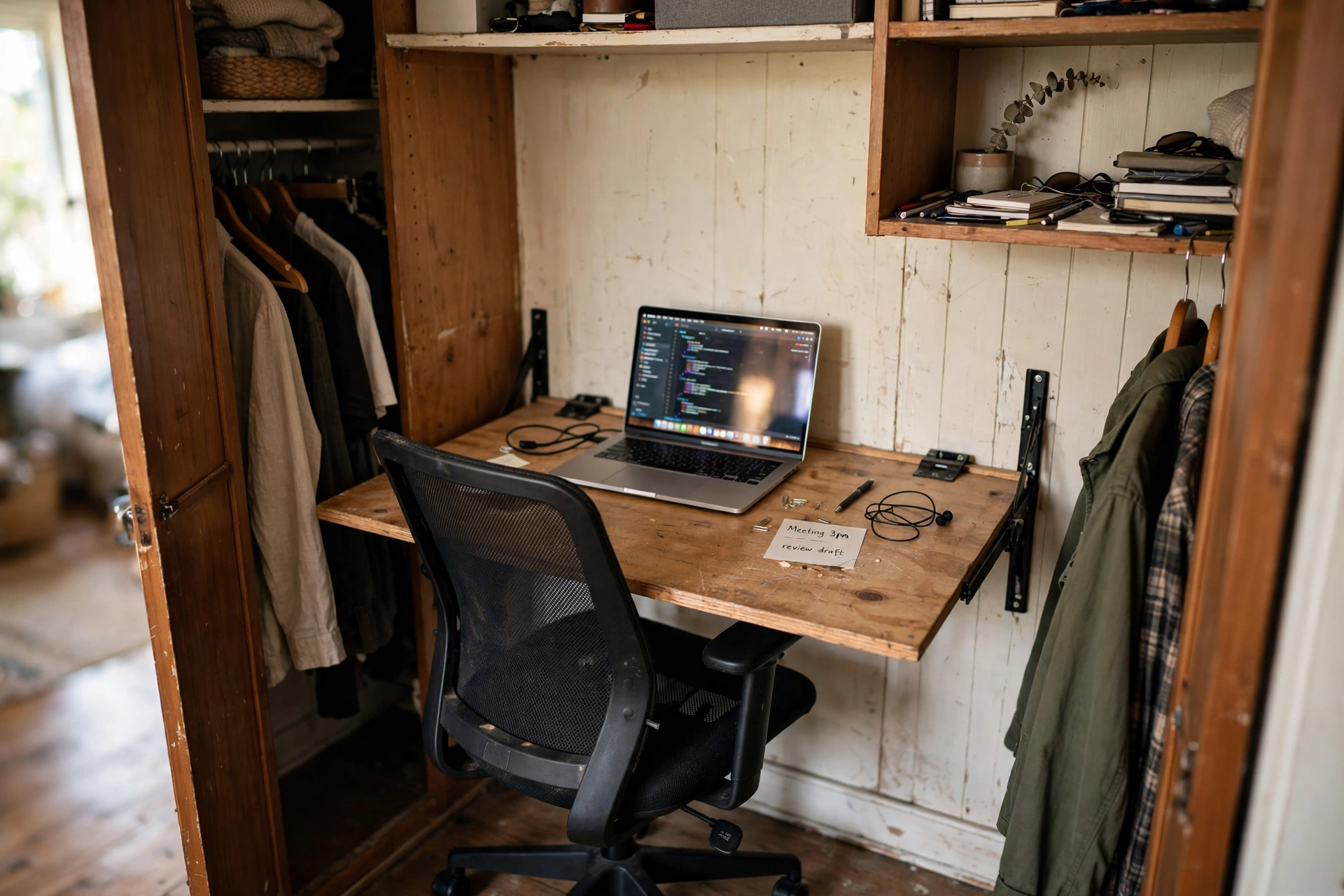
A closet office fails if the chair does not fit. Measure the opening before you buy, then choose a chair that slides fully under the desk.
Compare a bulky executive chair with a slim task chair here. The executive chair feels plush for an hour, then blocks the door and traps heat in a small space. A slim mesh chair with flip-up arms tucks away, breathes in a warm closet, and still supports a full workday. Sit in it at desk height and check that your knees clear the desk underside and your elbows rest naturally.
Why this one: Flip-up armrests let the chair slide fully under a closet desk, the mesh back breathes in a warm space, and the saddle cushion suits long sessions.
Worth knowing: The seat is firmer than a padded executive chair, so it suits shorter sessions best unless you add a cushion, and the armrests flip up but do not adjust in height.
Step 7: Power It Safely and Test the Whole Setup
AI-generated image
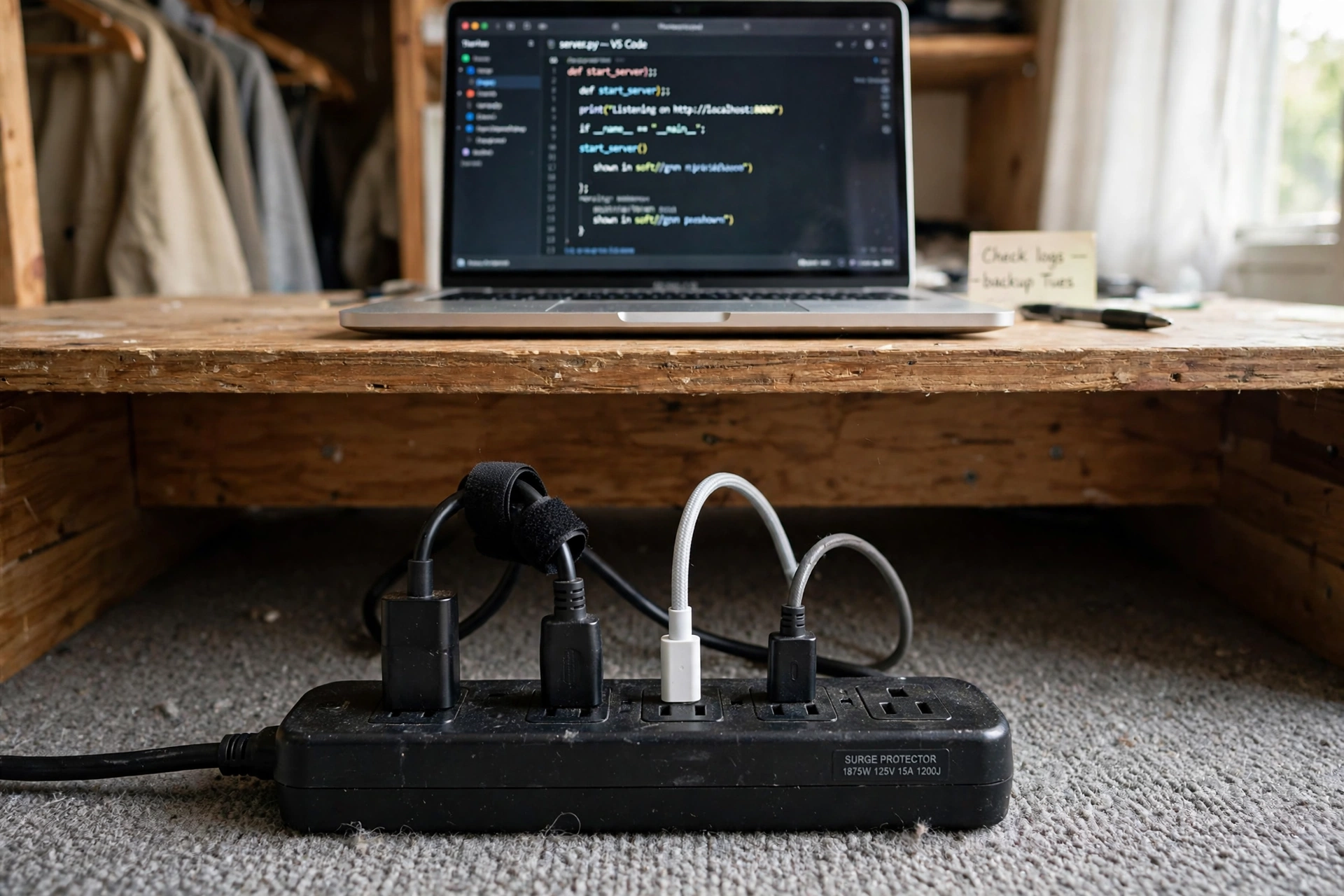
Power is the last step because it ties the build together. Run one surge protected strip from the wall outlet to the desk, and plug the monitor, laptop charger, lamp, and light bars into it.
Then test the setup properly. Work a full morning in the closet with the door closed. Check the light, the chair height, the screen glare, and the air. If anything feels cramped or hot, adjust it now, while the fix is still a small move and not a rebuild.
Why this one: Five outlets plus four USB ports power a monitor, laptop, and lamps from one strip, the ten foot flat cord reaches distant outlets, and surge protection guards your gear.
Worth knowing: The USB charging is standard speed, not fast charge, and the strip is rated for ten amps, so keep high draw heaters out of the closet.
Frequently Asked Questions
How much does a closet home office cost to build?
It depends on what you already own. A fold-down desk, light bars, and shelves are the main buys, and many people build a working setup with those three plus a chair they already have.
Do I need to remove the closet doors?
No. Keep them if you like closing work away at night. Remove them only if the chair will not fit through the opening or the doors block light from the room.
How do I keep a closet office from getting hot?
Leave a gap at the top or bottom of the door for air, keep the light bars LED so they run cool, and open the door between sessions. A small fan helps on warm days.
Can a closet fit a monitor and a laptop?
Yes, if the closet is at least 30 inches wide. Put the monitor on the fold-down desk and the laptop on a small riser or shelf beside it, and keep the keyboard on the desk surface.
What if my closet has no power outlet?
Run a flat extension cord from the nearest outlet through the door gap, or ask an electrician to add an outlet inside. Never run a cord under a rug or through a wall yourself.
Conclusion
Seven steps turn an empty closet into a real office: measure, mount the desk, add light, hang storage, add shelves, fit the chair, and power it safely. The build works because each step prepares the next one, and nothing is mounted twice. Close the door at the end of the day and work stays where it belongs. For more small room setups and desk ideas, browse the Home Office Ideas collection and pick the next small change to make.
Written by Maya Bennett, Founder and Editor of desk and glow.
