What Color Should You Paint a Home Office?
By Maya Bennett, Founder & Editor. Paint is the cheapest big change a home office can get, and the colour you pick sets the mood of every workday that follows. This article is about the paint itself, not about a room full of furniture. It covers light neutrals, warm and cool tones, dark accent walls, and how to test a colour before you commit to a whole wall. For the furniture that sits against the paint, the Home Office Ideas category has desk setups that suit pale, warm, and dark walls alike.
As an Amazon Associate I earn from qualifying purchases. Please see our affiliate disclosure for details. This article prints no prices, because prices change. Check the listing before you buy, and confirm you have the exact variant named.
AI-generated image
In this article
The direct answer
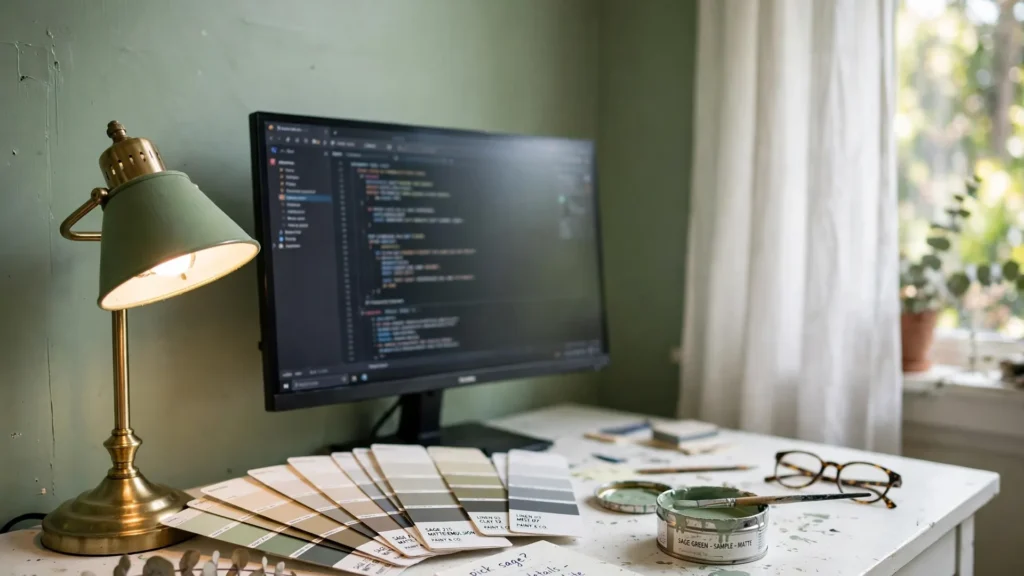
Paint your home office a light neutral with a warm or cool undertone that suits your light, and save strong colour for one accent wall. Warm white, pale greige, and soft sage green suit most rooms, because they brighten the space without shouting. A pale colour makes a small room feel bigger and keeps the wall behind your screen calm on video calls. If your room gets little daylight, pick a warm white rather than a stark white, because stark white can look grey and flat in a dim room. If your room gets strong sun, a cool pale blue or sage keeps the glare down.
There is no one best colour for every office. The right colour depends on the light in your room, the colour of your desk, and whether you want the room to feel calm, bright, or bold. Start with a light neutral on most walls, then add colour where it counts.
Light neutrals
AI-generated image
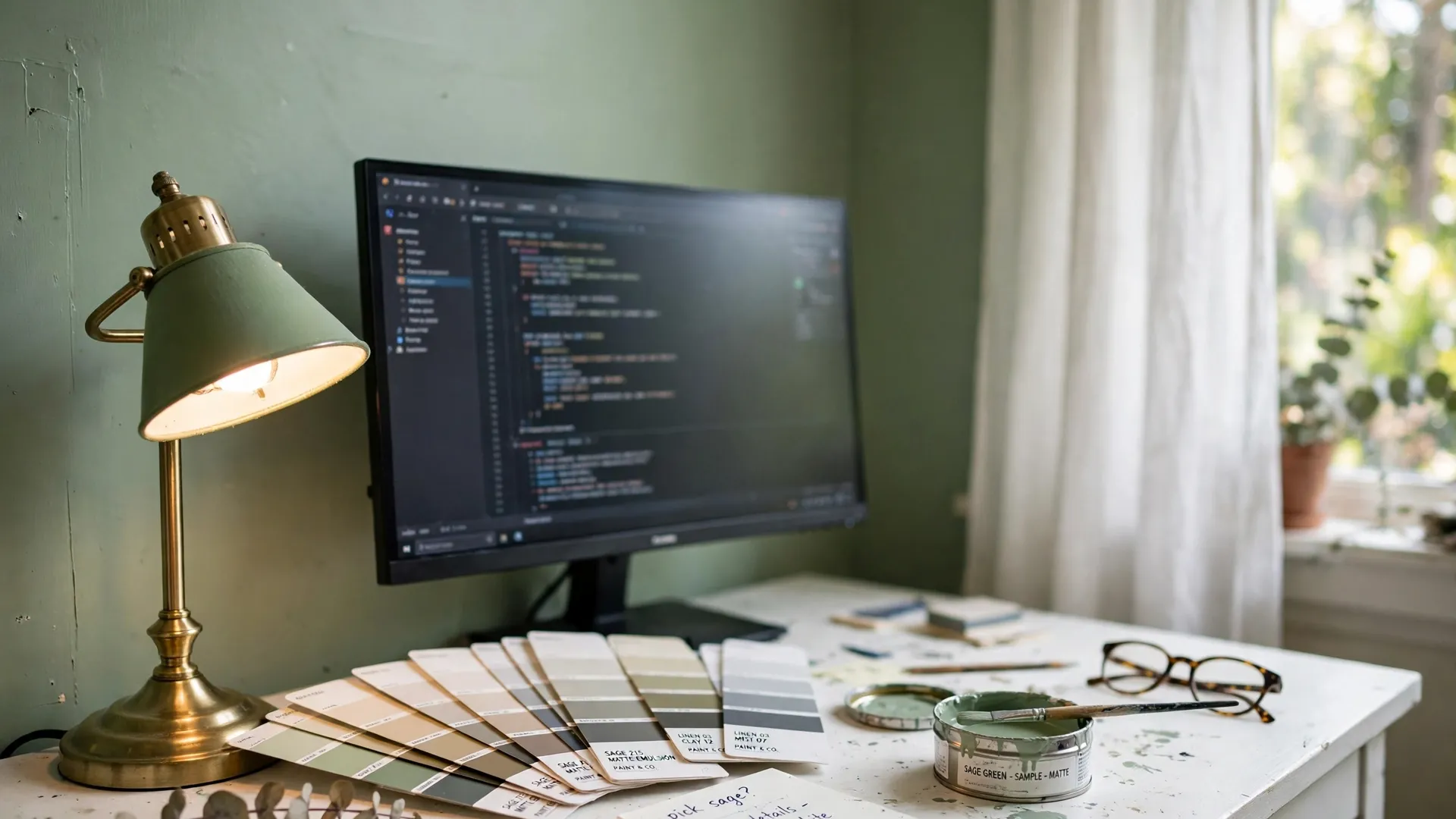
Light neutrals are the safe pick for a reason. Warm white, off white, pale greige, and light grey all reflect daylight around the room, which makes a small office feel open and keeps the desk area bright. They also suit any desk colour, from white to walnut, so you are not locked into one furniture style. A pale wall behind the screen reads clean on a video call, and it never fights with the colours on your monitor.
SWATCH GUIDE
Warm white for dim rooms, cool white for sunny rooms, pale greige when you want a little warmth without a strong colour, soft sage when you want a hint of green.
The catch is that a pale room can feel plain if nothing else adds warmth. A wooden desk, a warm lamp, and one plant fix that without repainting. Keep the paint pale and let the furniture and light do the warming.
PAIRS WITH PALE WALLS
CubiCubi Computer Desk, 47 Inch, Modern White
Why this one: A plain white 47 inch desk that sits neatly against pale walls without adding another strong colour.
Worth knowing: A white desk shows dust and marks more readily, so wipe it down often.
Warm or cool
AI-generated image
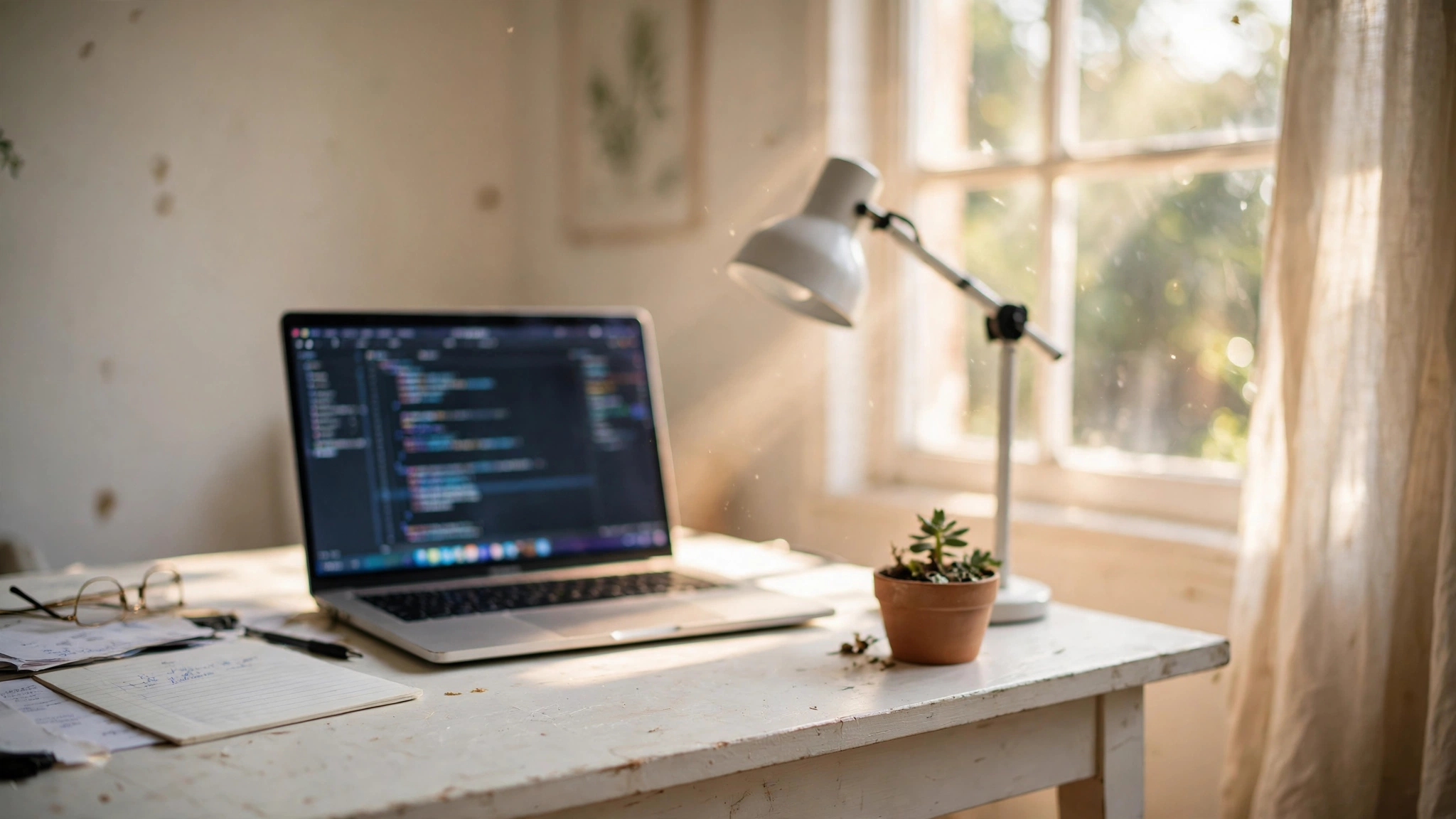
Every paint colour leans warm or cool, and the lean matters more than the colour name. Warm colours carry yellow, red, or pink undertones, and they make a room feel snug and welcoming. Cool colours carry blue, green, or grey undertones, and they make a room feel calm and open. A north facing room with cool light suits a warm colour, because the paint balances the light. A sunny room with warm light suits a cool colour, because the paint calms the glare.
- Warm picks: warm white, beige, terracotta, soft peach, warm sage.
- Cool picks: pale blue, blue grey, cool sage, soft mint, pale lavender grey.
- Check the undertone in daylight, not under a shop light, because the undertone is what you will live with.
Your desk and floor matter here too. Warm wood floors and walnut desks suit warm paint, while white desks and grey floors suit cool paint. When the paint and the wood pull in the same direction, the room feels settled rather than split.
JUDGE THE COLOUR IN REAL LIGHT
Simple Designs Basic LED Desk Lamp, 14.25 Inch, White
Why this one: A small white LED lamp that adds clean light to the desk, so you can see how the wall colour looks in the evening as well as in daylight.
Worth knowing: It is a compact lamp, so it suits one desk zone rather than a whole wide desk.
Dark accent walls
AI-generated image
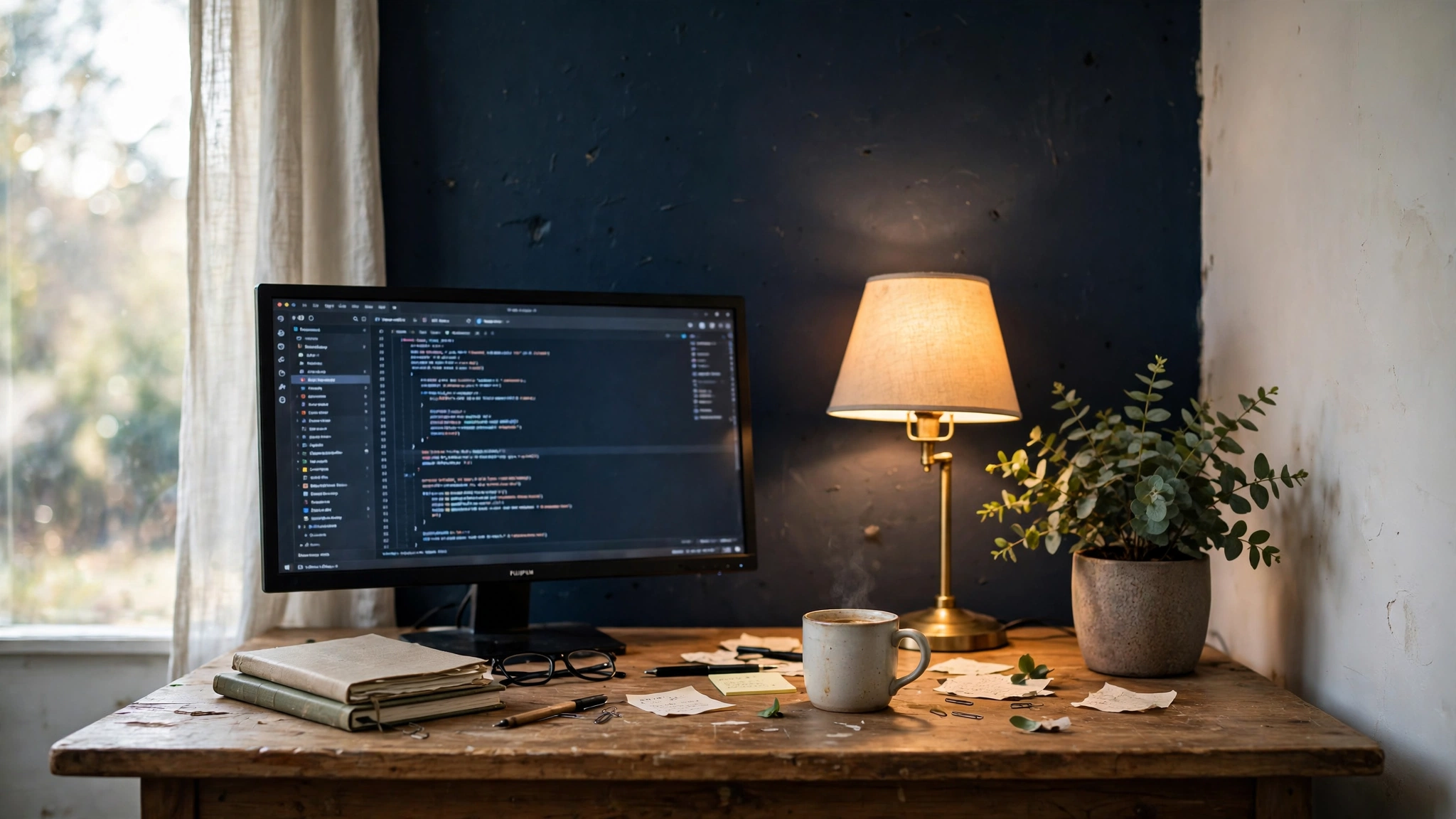
A dark accent wall can look superb in a home office, but it works best as one wall, not four. Navy, deep green, or charcoal behind the desk gives the screen a strong backdrop, makes a lamp glow warmer, and adds a sense of depth to the room. The other walls stay pale, so the room keeps its light. A full dark room suits a large office with big windows, but in a small room four dark walls can feel close and dim by mid afternoon.
Where to put it: the wall behind the desk, so you see it when you sit down and your video calls get a tidy backdrop. Keep the desk and the lamp light in tone against the dark wall, and the contrast does the decorating for you.
Dark paint also shows marks and dust more readily, and it takes more coats to cover if you change your mind later. Paint one wall, live with it for a month, and only then decide whether the room wants more.
Test before you commit
AI-generated image
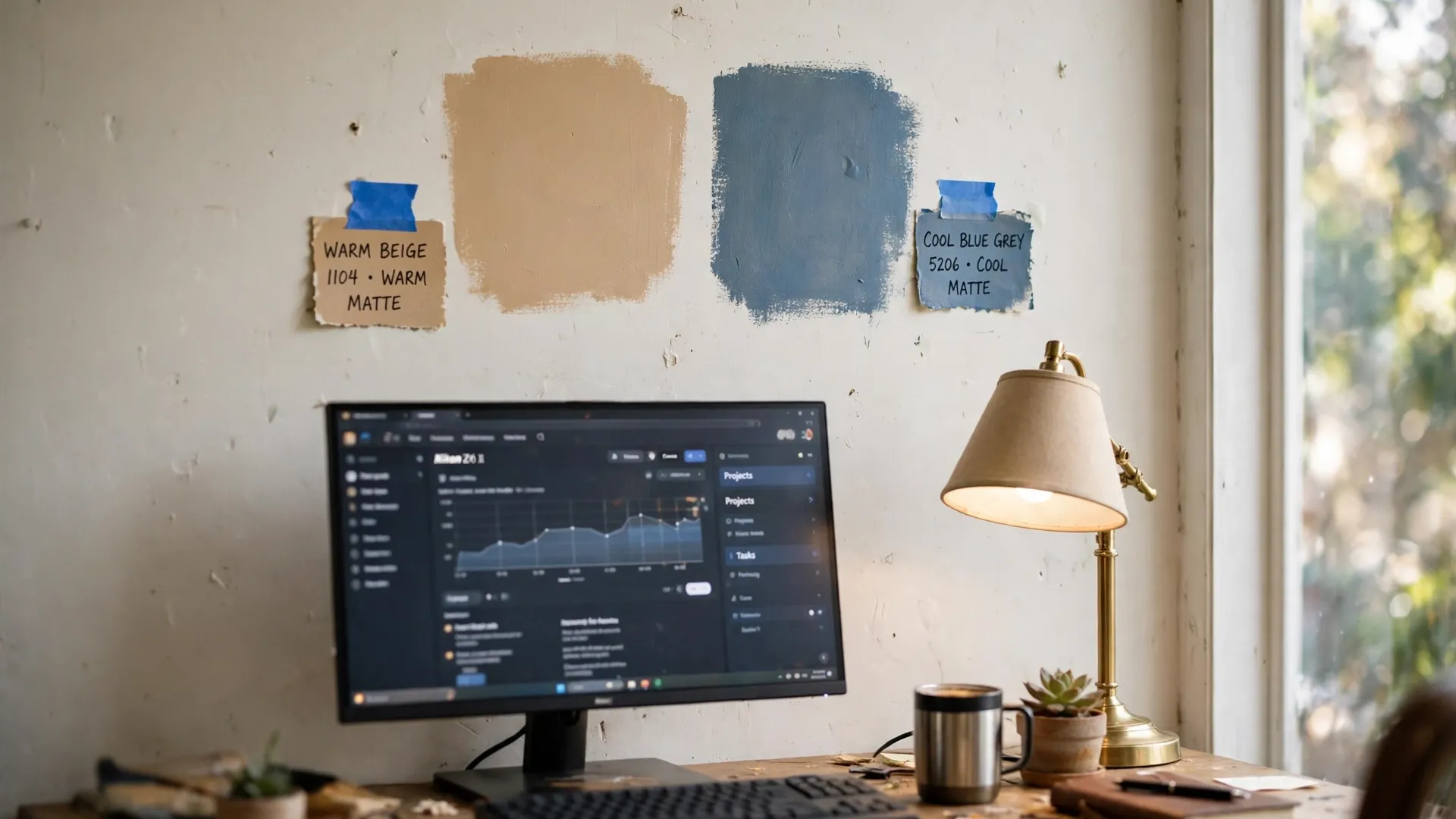
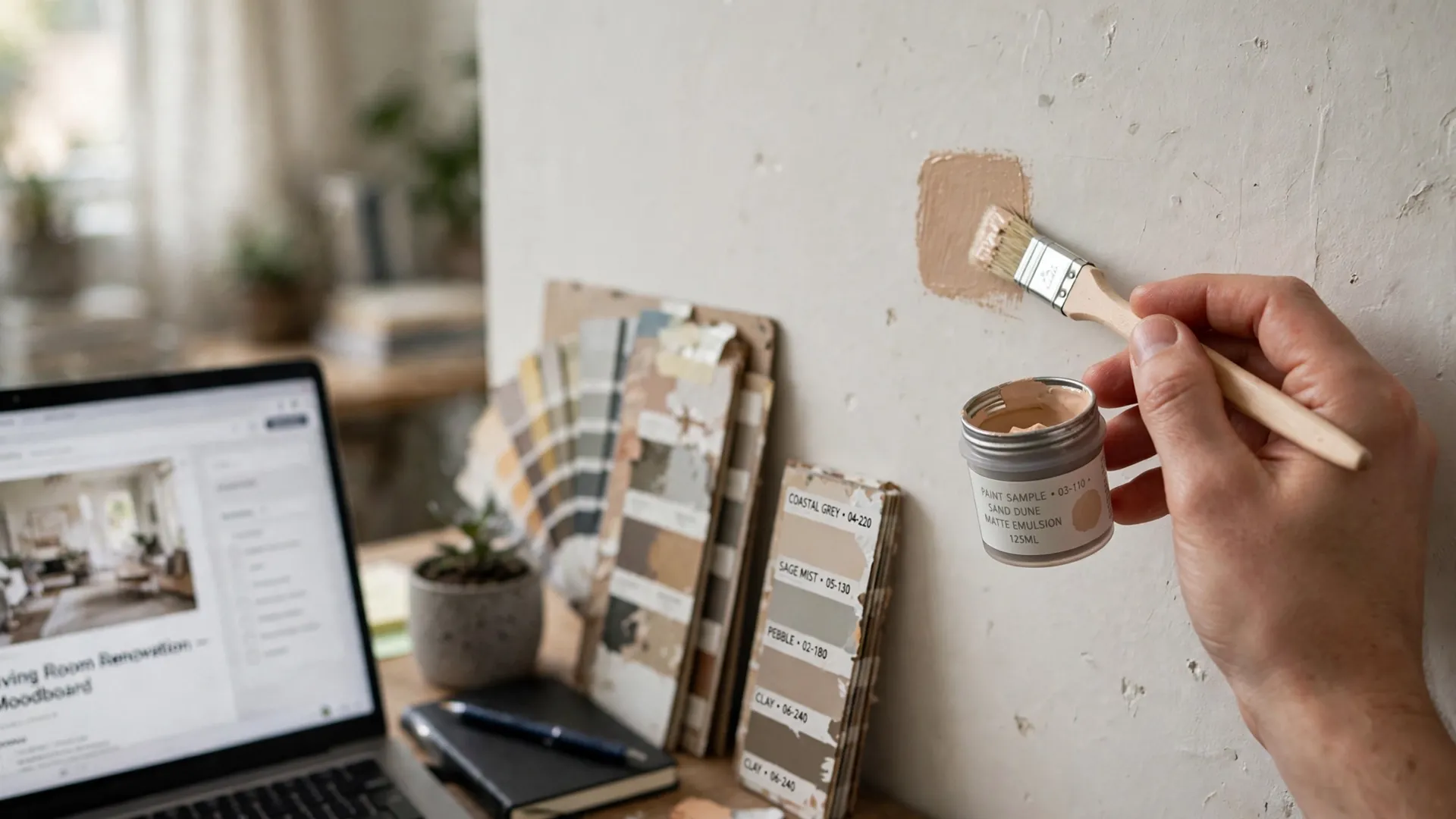
Never buy a full can from a colour card alone. Screens and shop lights lie about paint, and a colour that looks soft in the store can look pink or grey on your wall at home. Buy a small sample pot, paint a large square on the wall you will see most, and watch it through a full day. Morning light, midday sun, and evening lamp light each show a different side of the same colour, and the one you like at noon may not be the one you like at dusk.
- Paint a test square at least a foot wide, not a tiny patch.
- Put the test square beside the desk, where you will see it while you work.
- Live with it for two or three days before you buy the full can.
Sample boards help too. Paint a board, move it from wall to wall, and hold it next to the desk and the floor. A sample pot costs little and saves a whole room of regret, so it is the best money in the whole project.
TEST IT FIRST
ALL-IN-ONE Paint by Heirloom Traditions, Peony (Pale Pink), 8oz Sample
Why this one: An 8 ounce sample pot that covers about 35 square feet, with a 30 colour card included, so you can test a real painted patch before buying a full can.
Worth knowing: This is a sample size in one pale pink shade, so pick your own shade from the colour card for the full room.
The verdict
Paint most of the room a light neutral, warm white for dim rooms and a cool pale tone for sunny ones, and put any strong colour on one accent wall behind the desk. Test a sample on the wall for a few days before you commit, and check it in morning light, daylight, and lamp light. That is the whole decision. The paint is the backdrop, not the star, so let the desk, the lamp, and the light do the rest. If you want a bold colour, one wall is enough to get the look without darkening the room. For a wide screen setup against a new accent wall, the ideas in 10 Ultrawide Monitor Gaming Setup Ideas show how a single screen fills a wall without a second monitor.
Frequently asked questions
What is the best paint colour for a small home office?
A light neutral, such as warm white, pale greige, or soft sage. Pale colours reflect daylight and make a small room feel open, while a dark colour on all four walls can make it feel close.
Should a home office be warm white or cool white?
Warm white suits a dim or north facing room, because it balances cool light. Cool white suits a sunny room, because it calms the glare. Test both on the wall in your own light before you choose.
Is a dark accent wall good for a home office?
Yes, as one wall behind the desk. It gives video calls a tidy backdrop and makes a lamp glow warmer. Keep the other walls pale so the room keeps its light, and live with one dark wall for a month before adding more.
Can I paint a rented home office?
Check your lease first. Many landlords allow painting if you repaint before moving out. If you cannot paint, a large painted sample board or a fabric wall hanging gives you colour without touching the wall.
How do I test a paint colour properly?
Paint a square at least a foot wide on the wall beside your desk, using a small sample pot. Watch it in morning light, daylight, and evening lamp light for two or three days before buying a full can.
Conclusion
Pick a light neutral for most walls, save strong colour for one accent wall behind the desk, and test a sample in your own light before you commit. The paint sets the mood, the desk and lamp do the rest, and a tested colour is one you will still like in a month, in morning light and in lamplight. For more ideas, browse the Home Office Ideas category.
