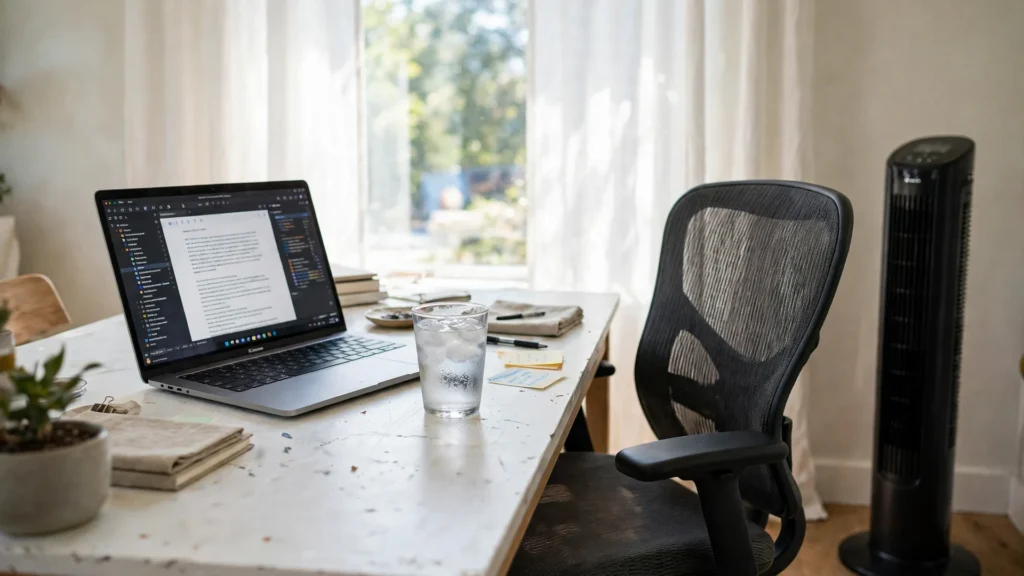
How to Keep Your Home Office Cool in Summer
A hot home office is usually hot for a few fixable reasons, not because the summer itself is unbeatable. Sun pours through the window, still air sits in the room, and a laptop, a monitor, and a lamp all add their own heat. This guide works through seven steps in the order that matters most, from finding where the heat comes in to working with the cooler hours, so you can stay cool without cooling the whole house. Browse more room ideas in the Home Office Ideas collection on desk and glow.
As an Amazon Associate I earn from qualifying purchases. Read our affiliate disclosure for details.
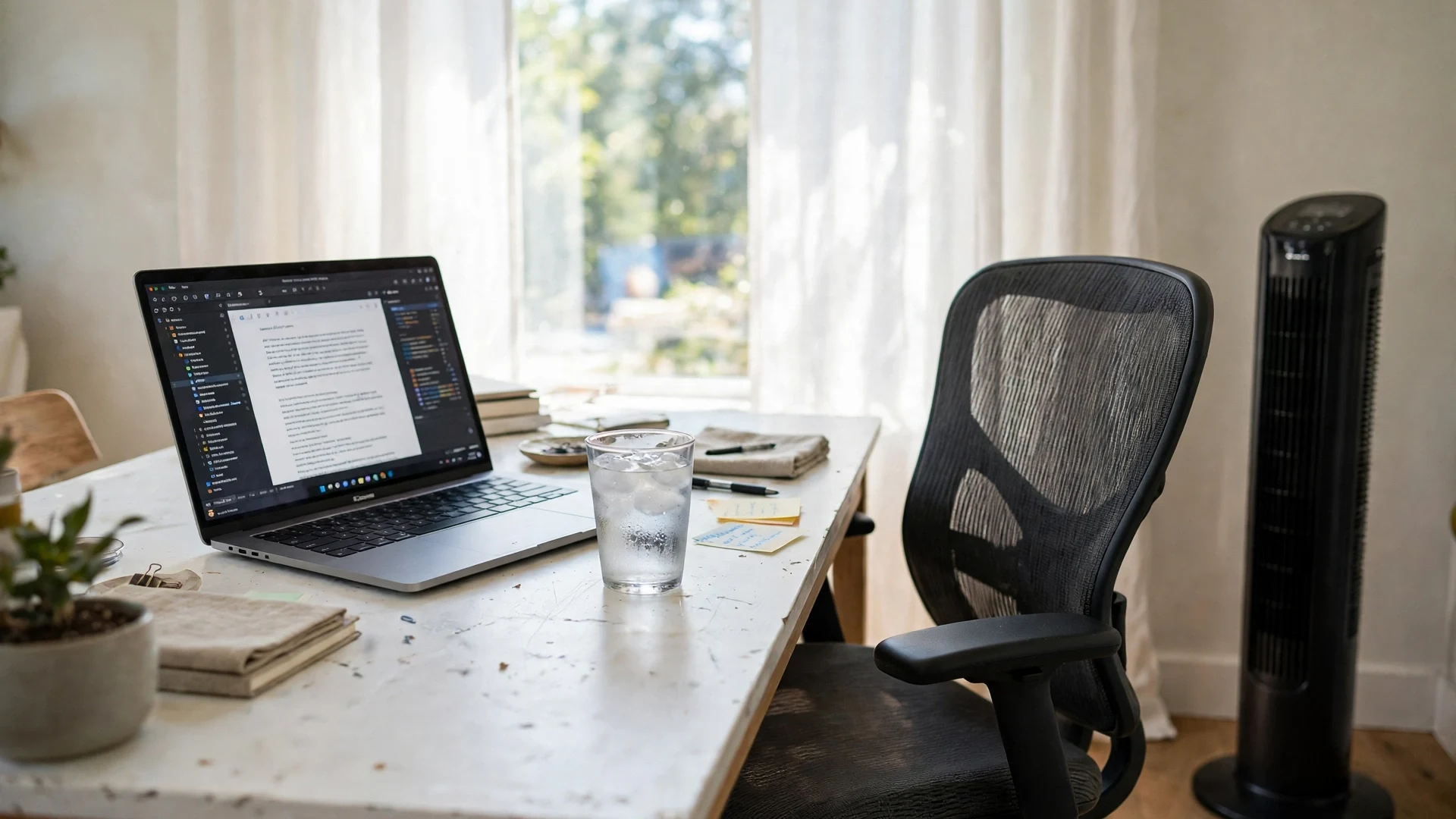
AI-generated image
In this guide
1. Find where the heat comes in
2. Shade the window
3. Move the air
4. Cool the desk zone
5. Switch to cool light
6. Clear the heat traps
7. Work with the cooler hours
FAQ
Conclusion
Steps at a glance
| Step | What it does |
|---|---|
| 1. Find where the heat comes in | Shows where to spend effort first |
| 2. Shade the window | Blocks the sun before it heats the room |
| 3. Move the air | Keeps air moving across the room |
| 4. Cool the desk zone | Cools the person at the desk |
| 5. Switch to cool light | Cuts heat from old bulbs |
| 6. Clear the heat traps | Frees airflow around the desk |
| 7. Work with the cooler hours | Uses the cool morning and evening |
1Find where the heat comes in

Before you buy anything, find out where the heat comes from. Stand by the window at midday and hold your hand near the glass, then near the desk, the monitor, and any vents. The sunlit window is usually the worst source, then the warm air that sits still in the room, then the heat from the laptop and the monitor themselves. Note which hours the room feels hottest, and which wall the sun hits at that hour. Buying a fan before shading the window is like bailing a boat with the tap still running.
- Feel the glass at midday and note which window runs hottest.
- Note the hottest hours, usually early afternoon on the sun side.
- Feel the air around the laptop and monitor for their own heat.
- Fix the biggest source first, then test again before buying more.
2Shade the window

Sunlight through glass is the fastest way a room heats up, so shade it before it gets in. White blackout curtains on the sun side reflect light and block the heat, and they double as glare control for the monitor. Hang them wider than the window frame and let them reach the floor, so they cover the whole opening instead of just the glass. Close them before the sun hits the window, not after the room is already hot, and open them again when the sun moves past. A shaded window can keep the room several degrees cooler by the afternoon.
Why this one: White blackout panels that reflect sun and cut glare on the bright wall, and match a white desk.
Worth knowing: Check the panel size against your windows, because the listed size is 34 by 54 inches.
3Move the air
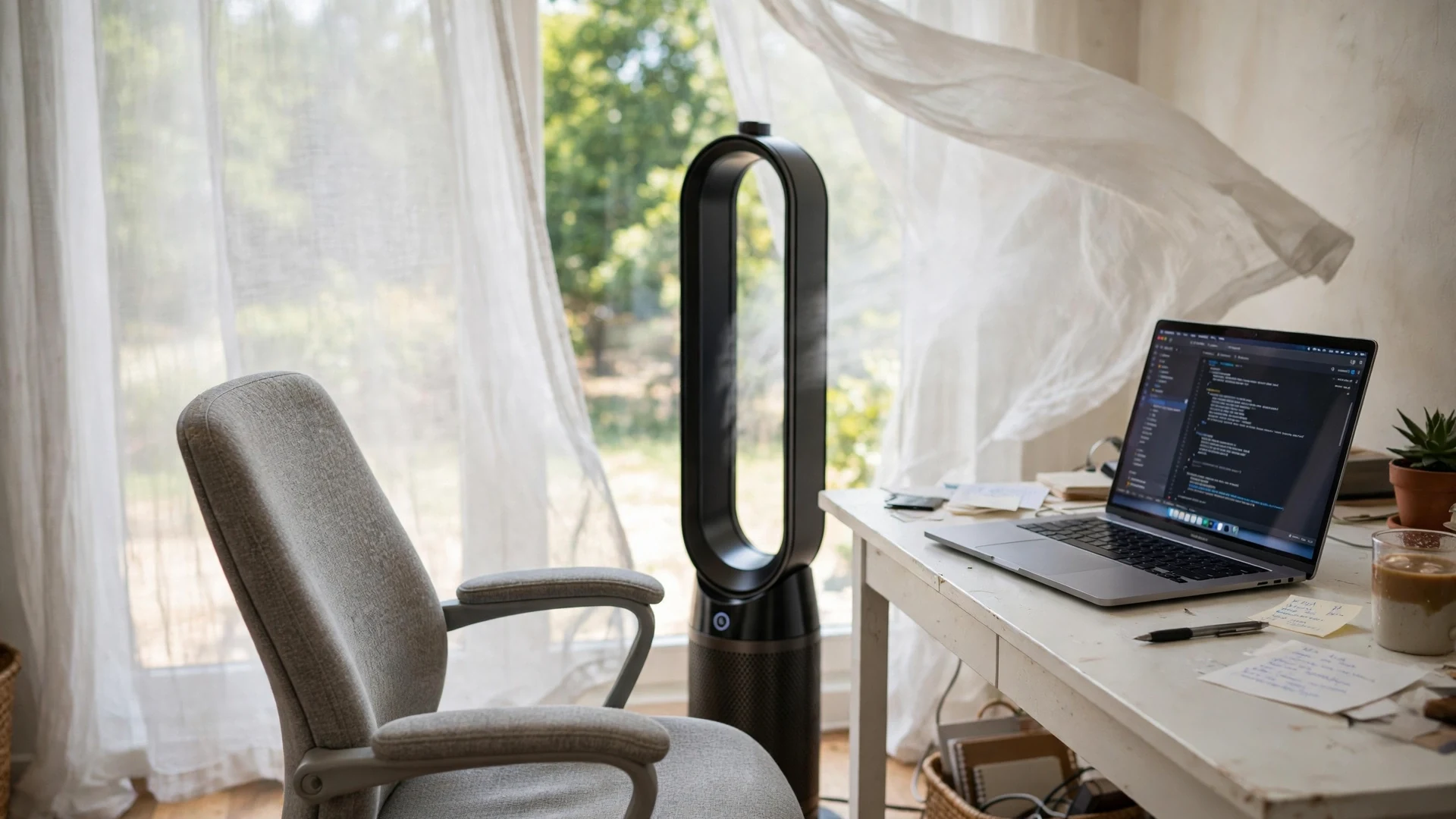
Still air feels hotter than moving air, even at the same temperature. A tall tower fan in the corner of the room moves air across the whole space, and its oscillation spreads the breeze instead of blowing one spot. Set it to a low speed for work, so papers stay put and calls stay clear, and use the timer so it switches off when you leave. A tower fan also helps at night, when you can open a window on the shaded side and let the fan pull cooler air through the room.
Why this one: A quiet 42 inch oscillating tower fan with nine speeds, a remote, and a 12 hour timer for a home office.
Worth knowing: It is a tall floor fan, so give it a corner with clear space around it.
4Cool the desk zone
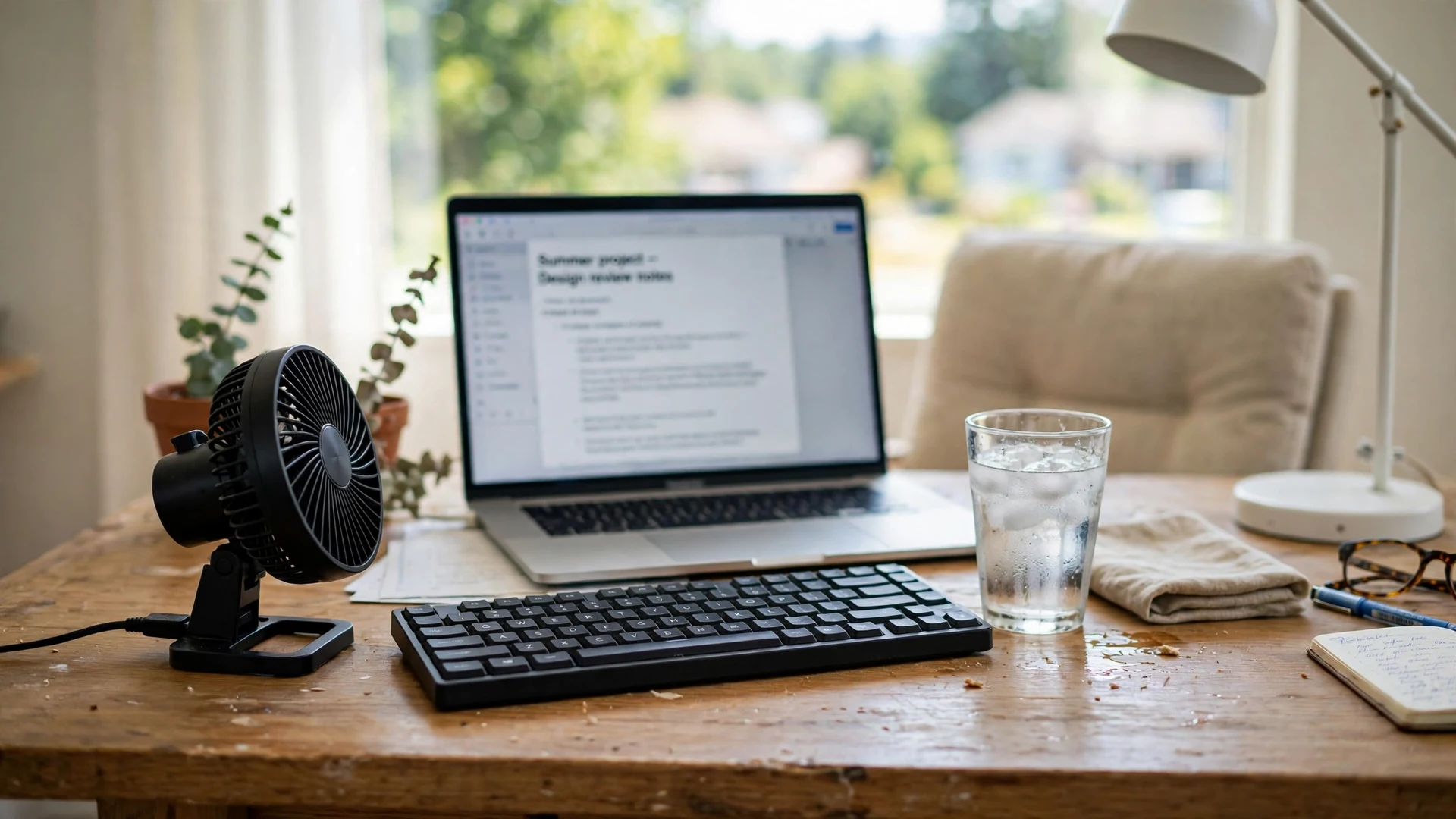
A tower fan moves the room, but a small desk fan cools the person at the desk. A compact USB fan plugs into the laptop or the desk power strip and aims a breeze at your face and hands, right where you feel the heat most. Keep a glass of cold water on the desk too, and point the fan at you, not at the screen, so papers stay put. A desk fan is the cheapest cooling in this guide, and on a warm afternoon it is often the one you notice most.
Why this one: A small USB desk fan with three speeds that tilts to aim the breeze at the person at the desk.
Worth knowing: It is a small personal fan, so it cools the person at the desk, not the whole room.
5Switch to cool light
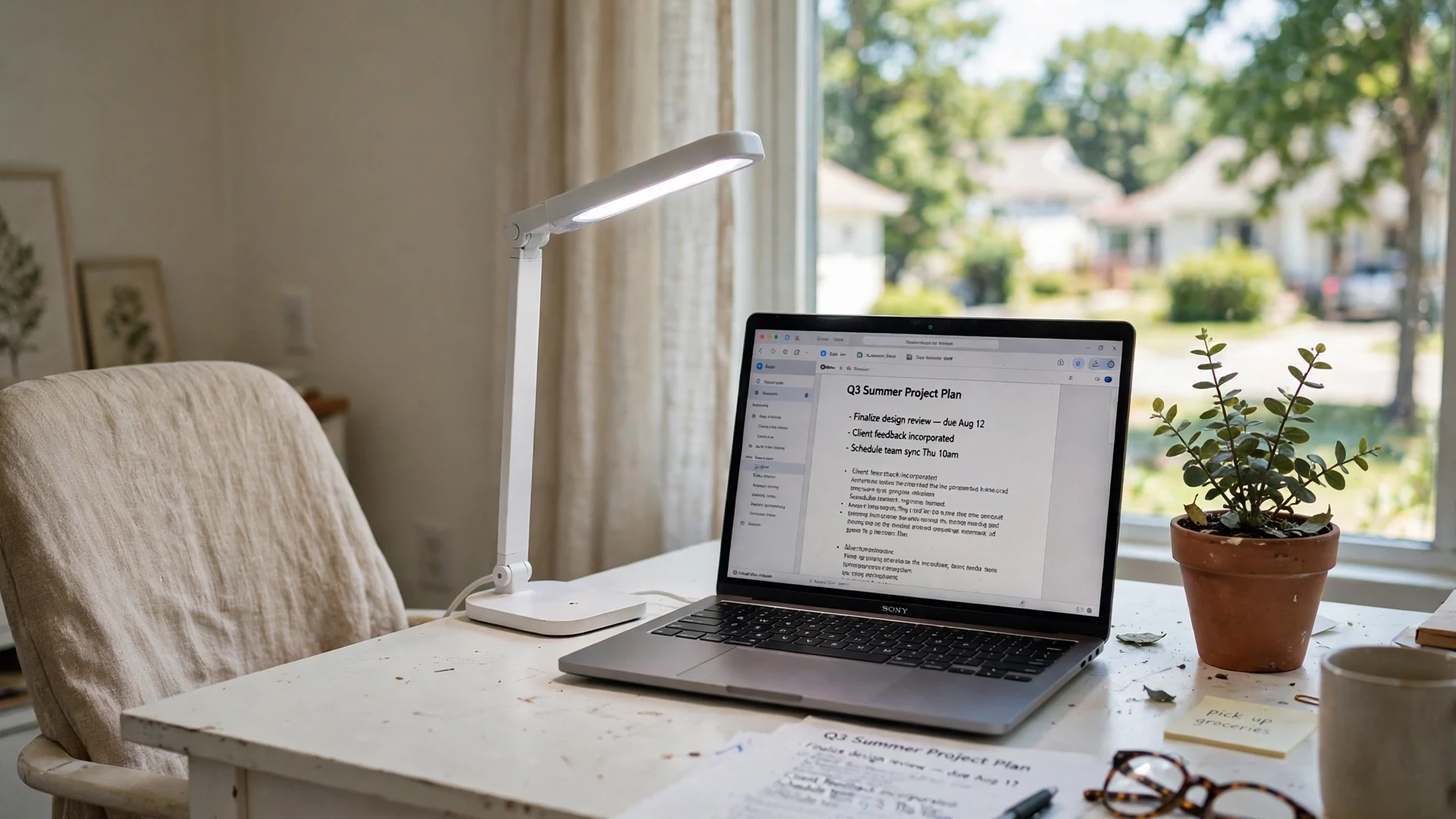
Old bulbs add heat to a room, and an LED lamp adds almost none. Swap any hot bulb over the desk for a simple white LED desk lamp, which lights the keyboard clearly and stays cool to the touch. Use the lamp only when the daylight fades, and switch it off during the bright hours, so the window does the work for free. A cool daylight tone also suits summer, because the room already has warm sun from the window and the lamp balances it rather than adding to it.
COOL PICK: Simple Designs Basic LED Desk Lamp, 14.25 Inch, White
Why this one: A simple white LED desk lamp that lights one laptop clearly and adds very little heat to the room.
Worth knowing: It is a basic lamp, so it suits one desk, not a whole room.
6Clear the heat traps
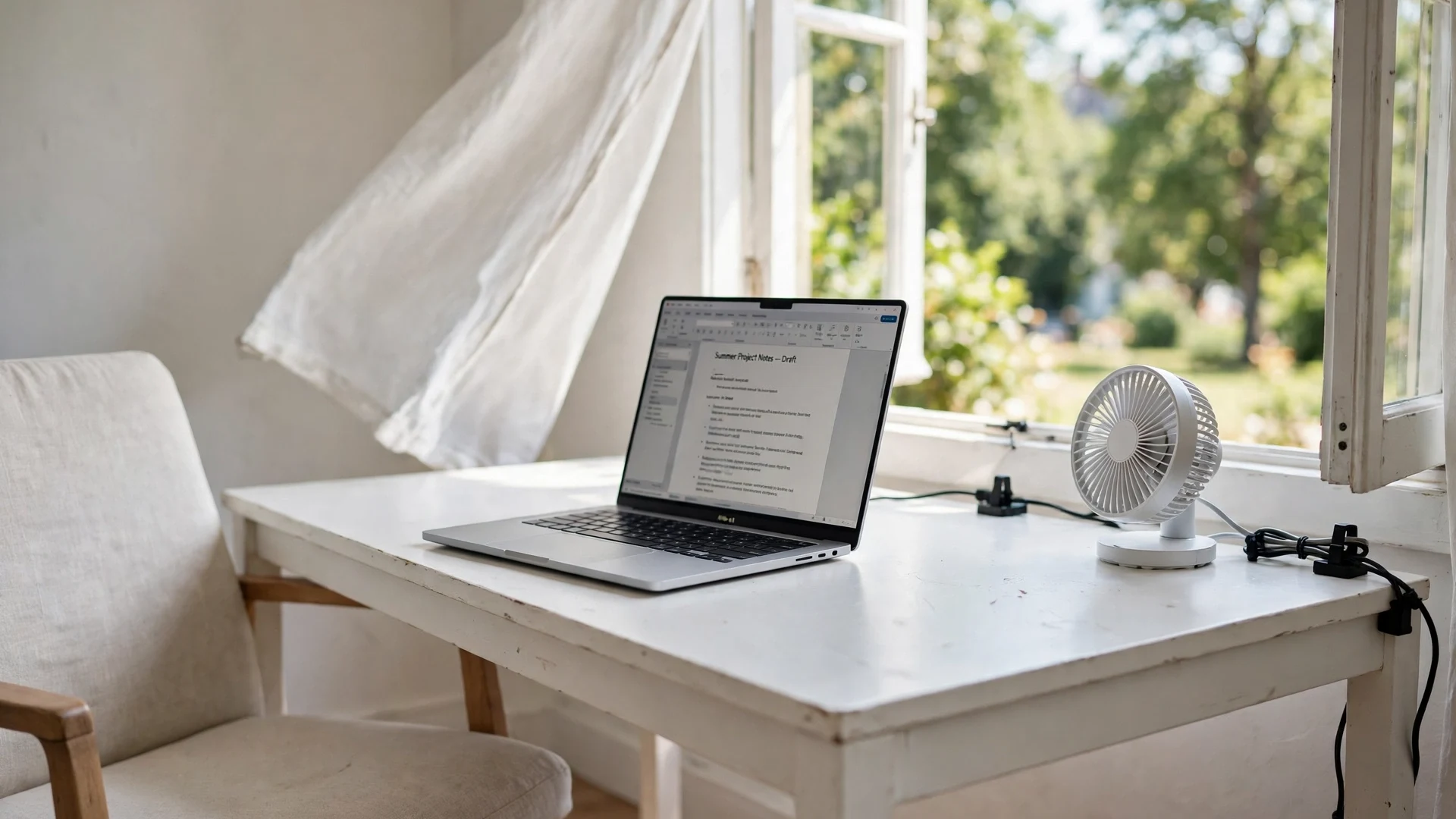
Heat hides in clutter. A pile of paper blocks airflow, a tangle of cables traps warm air behind the desk, and a laptop sitting flat on the desk cannot breathe underneath. Clear the desk to the laptop, the lamp, and one notebook, route the cables behind the desk where air can move, and raise the laptop on a stand so air flows under it. Open a window on the shaded side and let the breeze cross the room, instead of sitting in still air. These fixes cost nothing, and they add up.
- Clear the desk to the laptop, the lamp, and one notebook.
- Route cables behind the desk, not across the floor.
- Raise the laptop on a stand so air flows underneath.
- Open a window on the shaded side for a cross breeze.
7Work with the cooler hours
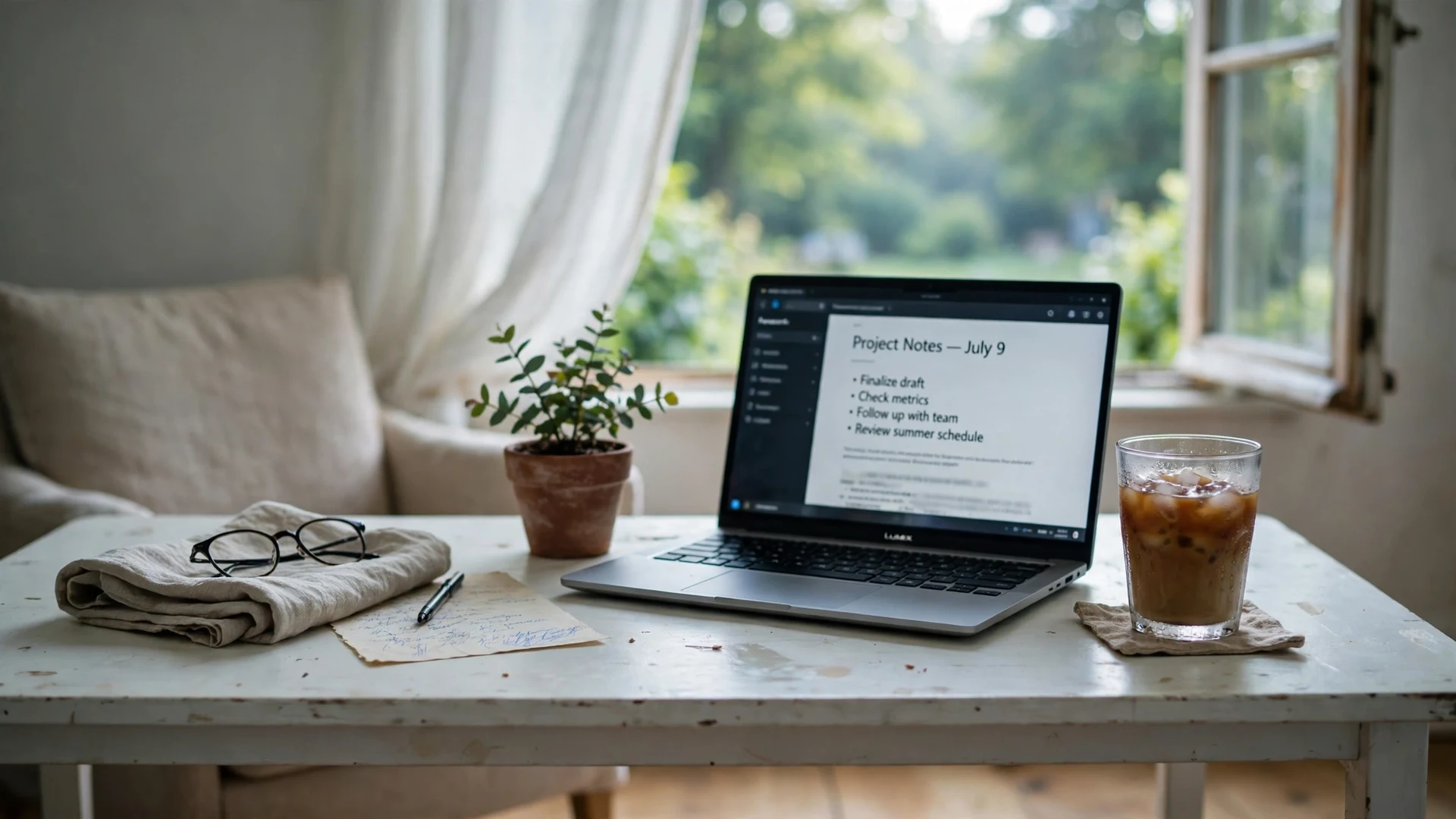
The cheapest cooling is the clock. Mornings and evenings are cooler than the afternoon, so do the hardest work early, when the room is still cool from the night. Open the windows in the morning to flush the warm air out, close the curtains before the sun hits, and take a break in the hottest hour if you can. Keep a bottle of cold water on the desk, and switch the laptop off when you leave the room, so it stops adding heat while you are gone. Working with the cooler hours is a habit, not a purchase, but it is the step that makes all the others work.
Frequently asked questions
What is the cheapest way to cool a home office?
Shade the window first, then move the air. White blackout curtains and a small desk fan cost little and make the biggest difference, because they stop the sun coming in and keep the air moving.
Does a fan actually cool a room?
A fan moves air, it does not lower the room temperature, but moving air feels cooler on skin. Pair the fan with shaded windows and a cross breeze, and the room will feel much cooler than still air at the same temperature.
Should I close the curtains during the day?
Close them on the sun side before the sun hits the window, and open them again when the sun moves past. White curtains reflect light and heat, so they work best when closed early, not after the room is already hot.
Will my laptop overheat in a hot office?
A laptop can get warm in a hot room, so raise it on a stand so air flows underneath, keep it out of direct sun, and point a small fan across it. If the room is very hot, work in the cooler morning hours.
What time of day is best for working in summer?
Early morning and evening, when the air is cooler and the sun is low. Do the hardest work early, take a break in the hottest afternoon hour if you can, and let the fan and the curtains handle the rest.
Conclusion
Keeping a home office cool in summer is a sequence of small fixes: find where the heat comes in, shade the window, move the air, cool the desk zone, switch to cool light, clear the heat traps, and work with the cooler hours. No one step does the whole job, but together they turn a hot room into a place where work feels comfortable. Start with the window, because the sun is the biggest source of heat, and add the rest one step at a time. For more ideas to shape the rest of your workspace, browse the Home Office Ideas collection.
