How to Pick the Right Desk Size for Your Room
By Maya Bennett, Founder and Editor. Desk size sounds like a simple shopping choice, and it is the one that most often goes wrong. Too wide and the room feels cramped, too narrow and your work spreads onto the floor. This guide shows you how to measure the room, measure your work, and pick a desk size that fits both. For more ideas in this series, browse the Home Office Ideas category.
As an Amazon Associate I earn from qualifying purchases. Please see our affiliate disclosure for details. This article prints no prices, because prices change. Check the listing before you buy, and confirm you have the exact variant named.
In this guide
Step 1: Measure the Room Before the Desk
Step 2: Measure Your Work, Not Just the Desk
Step 3: The Compact Pick for Small Rooms
Step 4: The Roomy Pick for Bigger Work
Step 5: Remember That Depth Matters Too
Step 6: Leave Walk Space and Chair Space
Step 7: Raise the Screen to Fit the Desk
Frequently asked questions
Conclusion
At a glance
| Step | What it does |
|---|---|
| Step 1: Measure the Room Before the Desk | Wall width, depth, and door swing come first |
| Step 2: Measure Your Work, Not Just the Desk | Count the gear that must live on the top |
| Step 3: The Compact Pick for Small Rooms | A 32 inch desk when space is tight |
| Step 4: The Roomy Pick for Bigger Work | A 55 inch desk when the work needs the width |
| Step 5: Remember That Depth Matters Too | Depth decides whether the screen sits far enough away |
| Step 6: Leave Walk Space and Chair Space | Keep a clear zone behind the chair |
| Step 7: Raise the Screen to Fit the Desk | A riser finishes the fit and frees the top |
Step 1: Measure the Room Before the Desk
AI-generated image
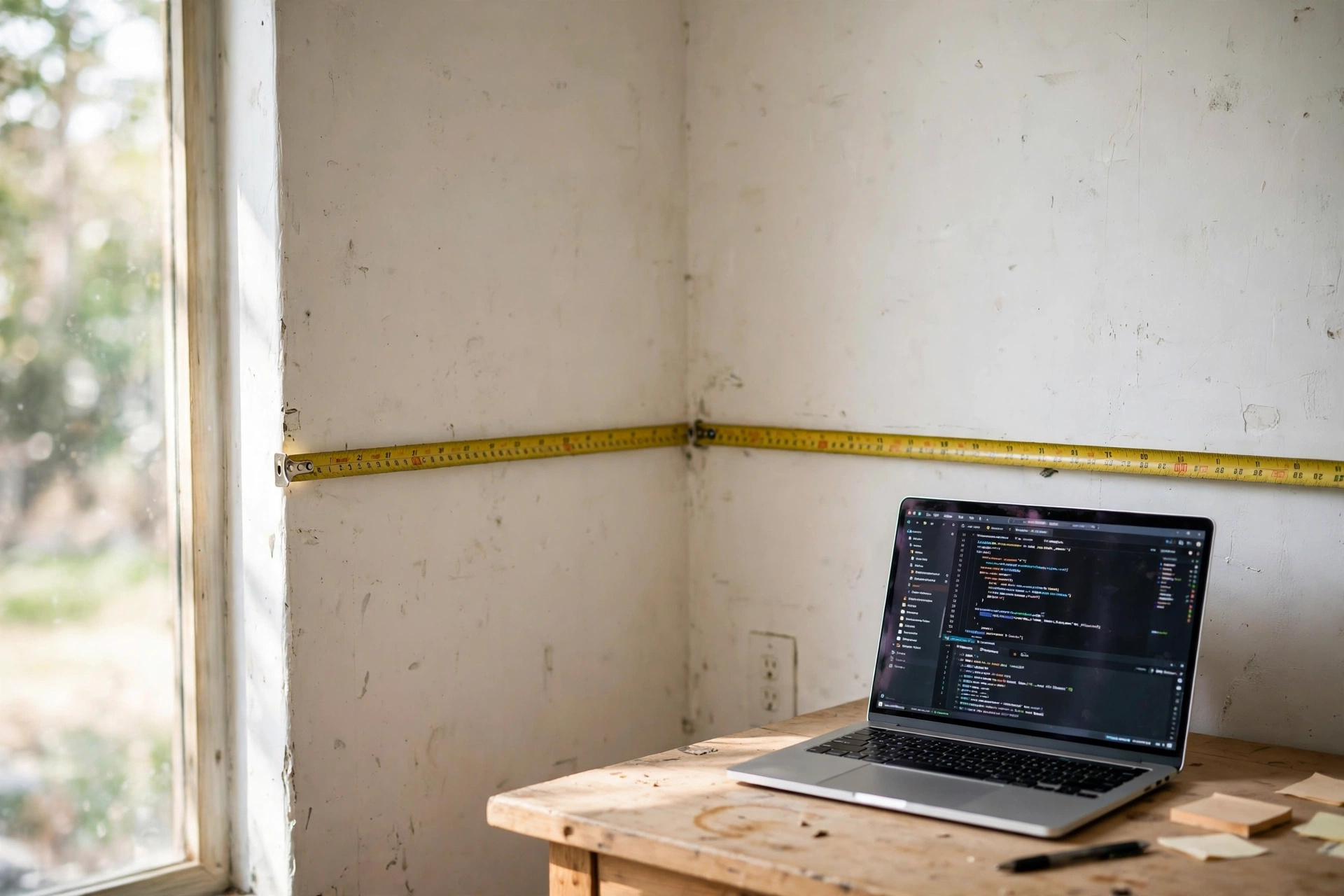
Start with the room, not the catalog. Measure the wall where the desk will stand, the depth from that wall, and the swing of any nearby door. Then mark the desk footprint on the floor with tape and walk around it for a day.
- Leave room for the chair to roll back without hitting a wall or bed.
- Keep a clear path to the door, even when the chair is pulled out.
- Note outlets and radiators, since they limit where the desk can sit.
If the taped outline feels tight, it will feel tighter with a monitor and papers on top. Trust the tape.
Step 2: Measure Your Work, Not Just the Desk

AI-generated image
A desk is sized by the work it holds. Lay out everything that must live on the top at once: laptop or monitor, keyboard, notebook, lamp, and phone. Measure that layout, then add elbow room on both sides. Most people need more width than they expect and less depth than they fear.
A laptop plus a notebook fits comfortably on a 32 inch top. Dual monitors, a full keyboard, and a printer need a wider top, usually 48 inches or more. Write down your layout width before you shop, and compare it with the desk dimensions, not the product photos.
Step 3: The Compact Pick for Small Rooms

AI-generated image
For a small room, a 32 inch desk is often the right call. It holds a laptop, a notebook, and a lamp, and it leaves floor space for the chair and a walkway. Drawers built into the desk add storage without a second piece of furniture.
What works here: a compact top, built in drawers for supplies, and a chair that tucks fully under the desk when the day ends.
The trade off is real: a second monitor or a large printer will not fit. If you add either later, plan for a riser or a side shelf rather than a wider desk.
Our pick: ODK Small Desk with Fabric Drawers, 32 Inch Modern Work Writing Study Table, White
Why this one: the 32 inch top suits small rooms, and the fabric drawers keep supplies close without a separate unit.
Worth knowing: the fabric drawers hold light items only, so heavy books belong on a shelf.
Step 4: The Roomy Pick for Bigger Work

AI-generated image
When the room allows it and the work is wide, a 55 inch desk earns its footprint. Dual monitors, a full size keyboard, and reference books fit side by side, and the extra width means elbows are not pinned to your sides. A height adjustable frame adds the choice to stand for part of the day.
Before you commit, check the delivery path: a 55 inch top needs a clear route through doors and hallways. Measure the doorway too, not just the wall.
Why this one: the 55 by 28 inch bamboo top gives real width for wide work, and the dual motor frame adjusts height with memory presets.
Worth knowing: it ships in two boxes and needs two people for easy assembly.
Step 5: Remember That Depth Matters Too

AI-generated image
Width gets all the attention, but depth decides comfort. A shallow desk pushes the monitor too close to your eyes and leaves no room for a keyboard in front of it. A depth of about 24 inches suits most monitor setups, while a laptop only setup can work with less.
Compare depth the same way you compare width: put your monitor and keyboard on a table, measure from the screen to the front edge, and add room for your wrists. If the number is larger than the desk depth, the desk will feel cramped no matter how wide it is.
Step 6: Leave Walk Space and Chair Space

AI-generated image
A desk that fits the wall but leaves no room to sit is a desk that does not fit. You need space behind the chair to pull it out, sit down, and push back, plus a walkway that stays clear when someone else passes through the room.
- Allow about 36 inches behind the chair for comfortable movement.
- Keep the walkway free of bags, boxes, and cables.
- If the room cannot spare that space, choose a smaller desk or a chair with a slimmer footprint.
Test the zone with the taped outline before you order, sitting in the chair and standing up a few times.
Step 7: Raise the Screen to Fit the Desk
AI-generated image
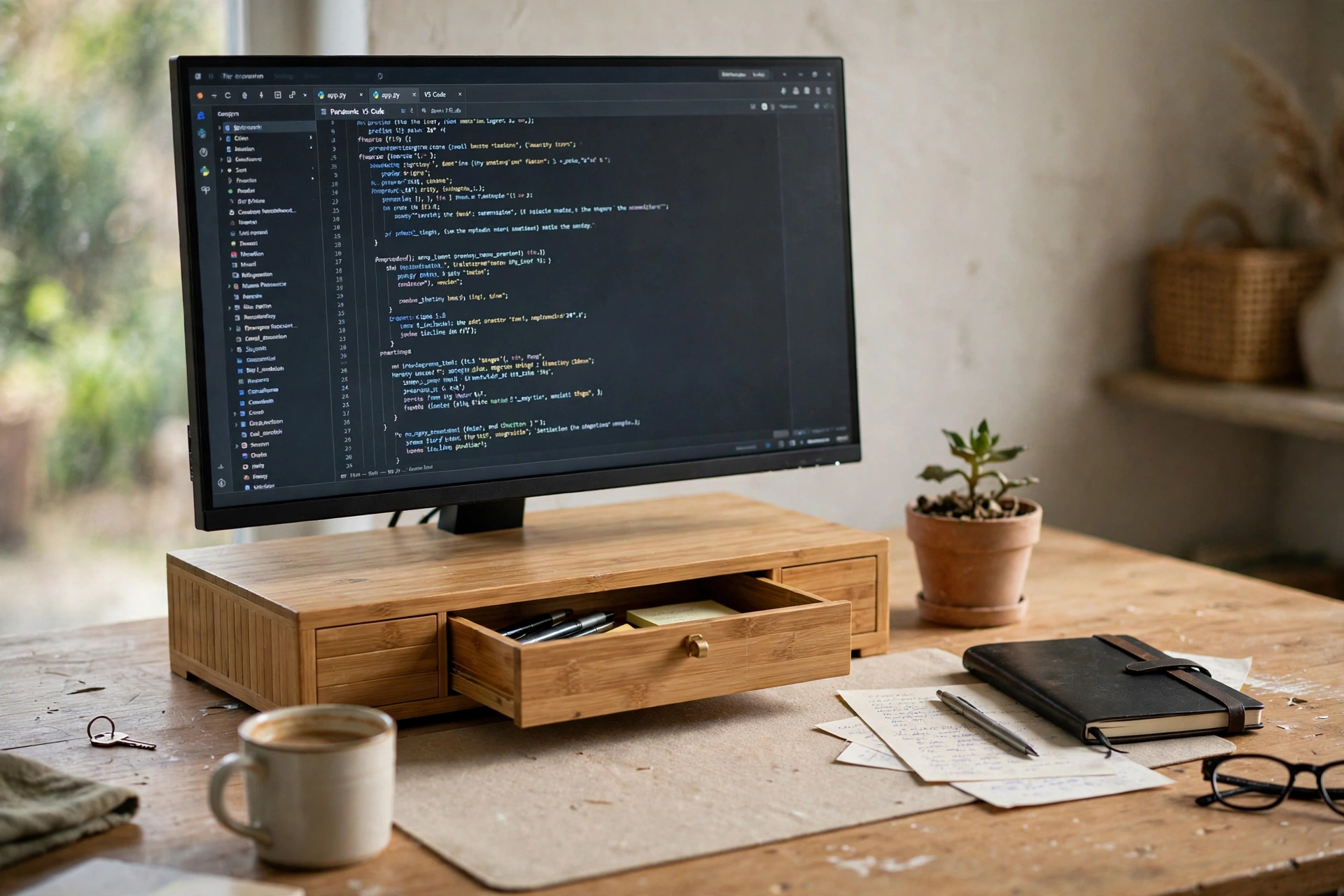
Once the desk size is right, finish the fit by raising the screen. A riser lifts the monitor toward eye level and frees the space underneath for a notebook or a keyboard when it is not in use. It is a small change that makes a right sized desk feel right.
Choose a riser that matches the desk width and holds your monitor’s weight. A bamboo riser with a drawer adds a little storage too, which suits a compact desk especially well.
Why this one: it arrives fully assembled, lifts the monitor to a comfortable height, and the drawer holds pens and small supplies.
Worth knowing: the drawer is shallow, so it suits pens and small items rather than notebooks.
Frequently asked questions
What desk size is best for a small room?
A 32 to 40 inch wide desk usually fits a small room well. Measure the wall and the chair zone first, and keep a clear walkway behind the chair.
How wide should a desk be for dual monitors?
Plan for at least 48 inches of width for two monitors plus a keyboard. Measure your actual monitor layout before you shop.
How deep should a home office desk be?
About 24 inches of depth suits most monitor setups. Laptop only work can fit on a shallower top, but check the screen distance first.
How much space do I need behind my desk chair?
About 36 inches behind the chair gives room to pull out, sit, and stand comfortably. Less than that feels cramped every day.
Is a standing desk worth it for a first setup?
It is worth it if the room fits a wider top and you want the choice to stand. If space is tight, a compact fixed desk with a good chair is the better first buy.
Conclusion
Picking the right desk size comes down to three measurements: the room, the work, and the chair zone. A compact 32 inch desk suits a small room, a 55 inch desk suits wide work, and the right depth and a raised screen finish the fit. Measure twice, buy once, and the desk will feel right for years. For your next step, browse the Home Office Ideas category for setups you can copy whole.
