
How to Add Plants to a Home Office Without the Mess
By Maya Bennett, Founder and Editor. Plants make a home office feel calmer and more alive, and they also bring soil, water, and dropped leaves to the desk. The trick is to choose the right plants and the right pots, and to keep watering and mess away from your work surface. This guide shows seven steps to green up the room with no mess on the desk. For more ideas in this series, browse the Home Office Ideas category.
As an Amazon Associate I earn from qualifying purchases. Please see our affiliate disclosure for details. This article prints no prices, because prices change. Check the listing before you buy, and confirm you have the exact variant named.
In this guide
Step 1: Start with Faux Plants for a Zero Mess Desk
Step 2: Pick the Right Pot and a Saucer
Step 3: Move Plants Off the Desk with a Wall Shelf
Step 4: Water at the Sink, Never at the Desk
Step 5: Choose a Ceramic Pot That Contains the Soil
Step 6: Group Small Plants in One Tray
Step 7: Run a Weekly Leaf and Soil Check
Frequently asked questions
Conclusion
At a glance
| Step | What it does |
|---|---|
| Step 1: Start with Faux Plants for a Zero Mess Desk | Faux greenery gives the look with no soil or water |
| Step 2: Pick the Right Pot and a Saucer | A pot with a saucer catches every drip |
| Step 3: Move Plants Off the Desk with a Wall Shelf | A wall shelf keeps pots away from papers and keyboards |
| Step 4: Water at the Sink, Never at the Desk | Carry plants to water and let them drain first |
| Step 5: Choose a Ceramic Pot That Contains the Soil | A solid ceramic pot keeps soil where it belongs |
| Step 6: Group Small Plants in One Tray | A tray catches soil and makes watering easier |
| Step 7: Run a Weekly Leaf and Soil Check | Five minutes a week stops mess from building up |
Step 1: Start with Faux Plants for a Zero Mess Desk

AI-generated image
If you want green on the desk with no watering, no soil, and no dropped leaves, start with faux plants. A set of three small potted eucalyptus plants brings color to the desk and needs nothing more than an occasional dusting. They look best in a small group rather than scattered one by one.
Choose faux plants with varied leaf shapes and a matte finish, since glossy plastic reads as fake from across the room. Place them where they catch daylight and they will look like part of the room, not a prop.
Why this one: three varied plants in one wood planter box give a finished look with no watering or soil at all.
Worth knowing: the plants are fixed in their pots, so you cannot rearrange them into separate planters.
Step 2: Pick the Right Pot and a Saucer
AI-generated image
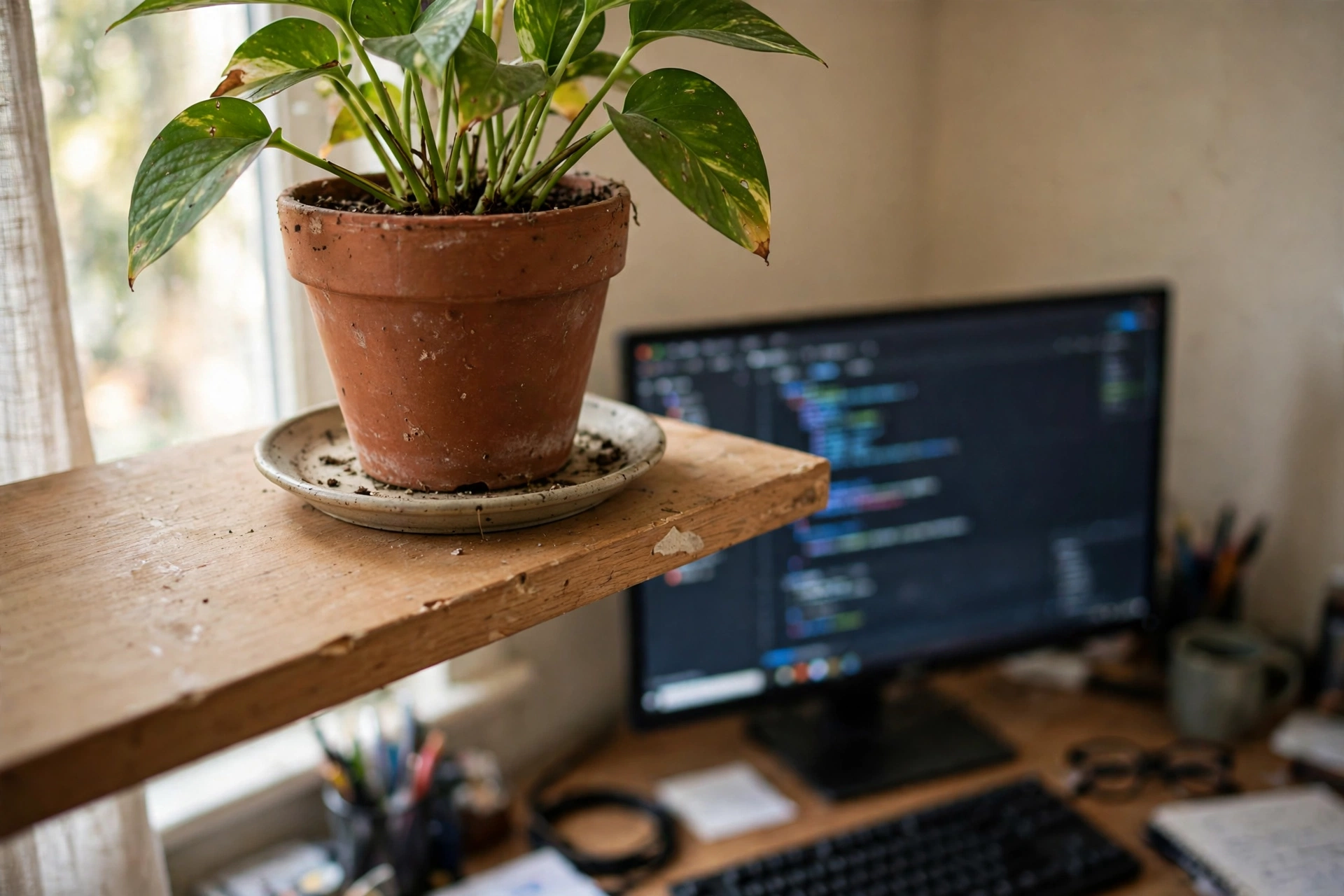
For real plants, the pot matters as much as the plant. Choose a pot that is only slightly larger than the root ball, since a pot that is too big holds wet soil for too long. Always pair it with a saucer or a cache pot that catches drips, and check that the saucer is wider than the pot.
Quick tip: add a thin layer of small stones under the pot inside the cache pot. It lifts the plant out of standing water and keeps the desk dry.
Wipe the saucer after watering and the desk stays clean all week.
Step 3: Move Plants Off the Desk with a Wall Shelf
AI-generated image
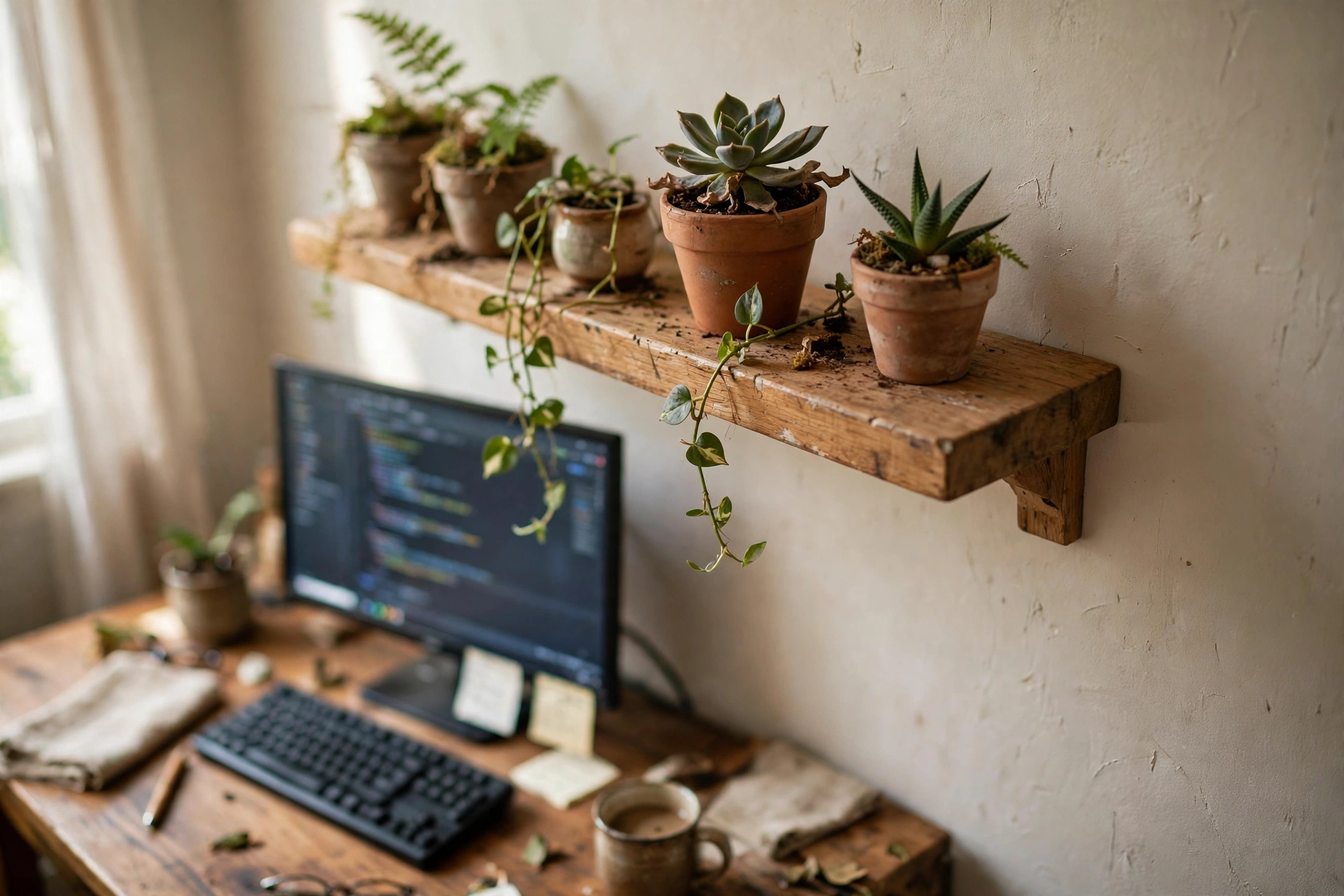
The simplest way to keep plants from messing up the desk is to take them off the desk. A two tier wall shelf above or beside the desk holds small pots where they get light and stay out of the way of papers, keyboards, and coffee cups.
Mount the shelf into a stud or use fixings rated for the weight, and keep the total load well under the shelf limit. Small pots are the right choice here: a heavy pot on a light shelf is the one mess you really want to avoid.
Why this one: two tiers hold small pots off the desk, and the wood finish suits most home office styles.
Worth knowing: the listed weight limit varies between 11 and 15 pounds across the listing, so keep pots small and light.
Step 4: Water at the Sink, Never at the Desk
AI-generated image
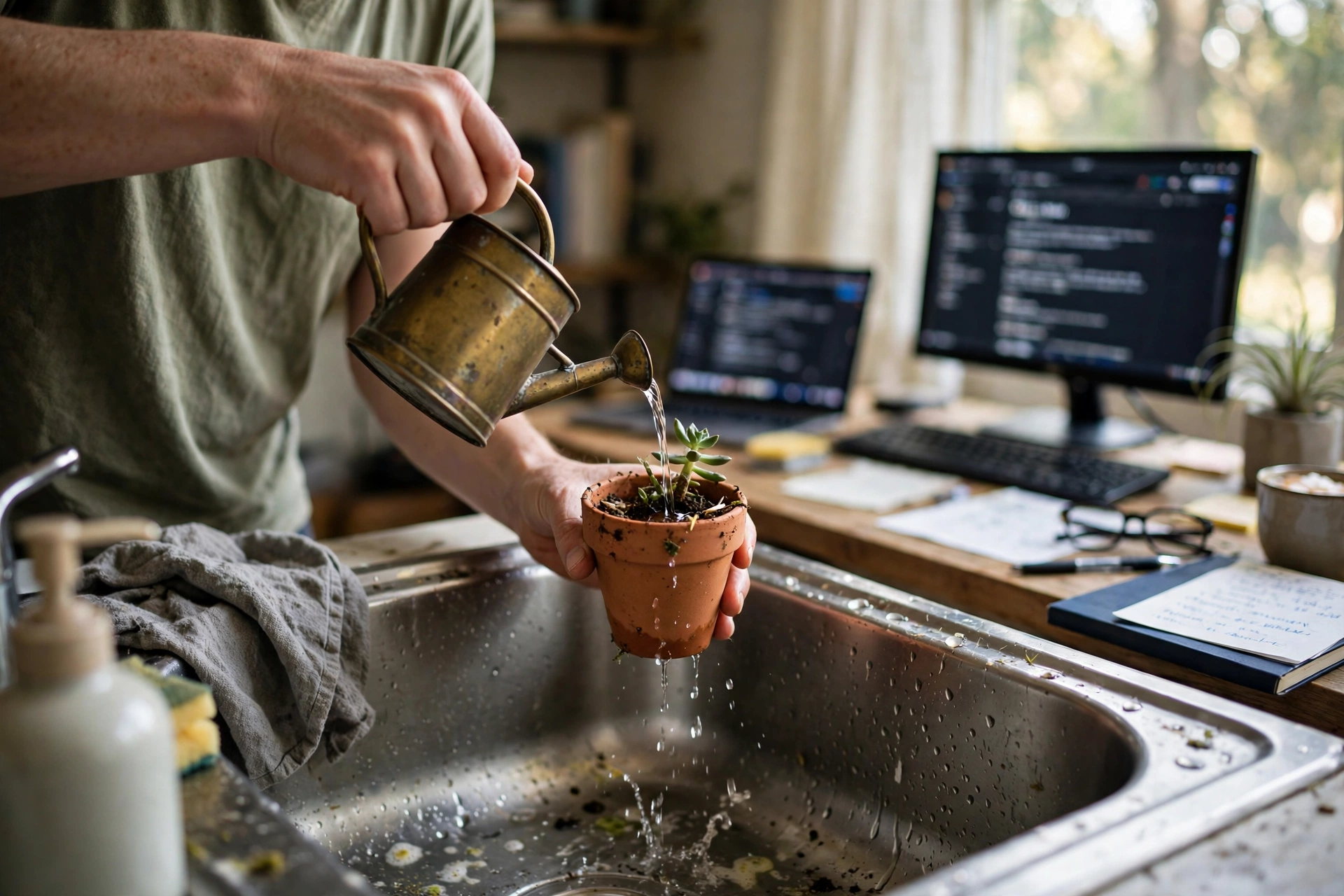
Most desk mess comes from watering at the desk. Water splashes, soil spills, and the saucer overflows onto papers. The fix is a simple rule: carry the plant to the sink, water it there, let it drain for a few minutes, and only then carry it back.
- Water slowly until a little drains from the bottom.
- Wait for the dripping to stop before moving the plant.
- Wipe the saucer and the pot before setting it back down.
Keep a small towel by the sink for the job, and watering stays a two minute task instead of a cleanup.
Step 5: Choose a Ceramic Pot That Contains the Soil
AI-generated image
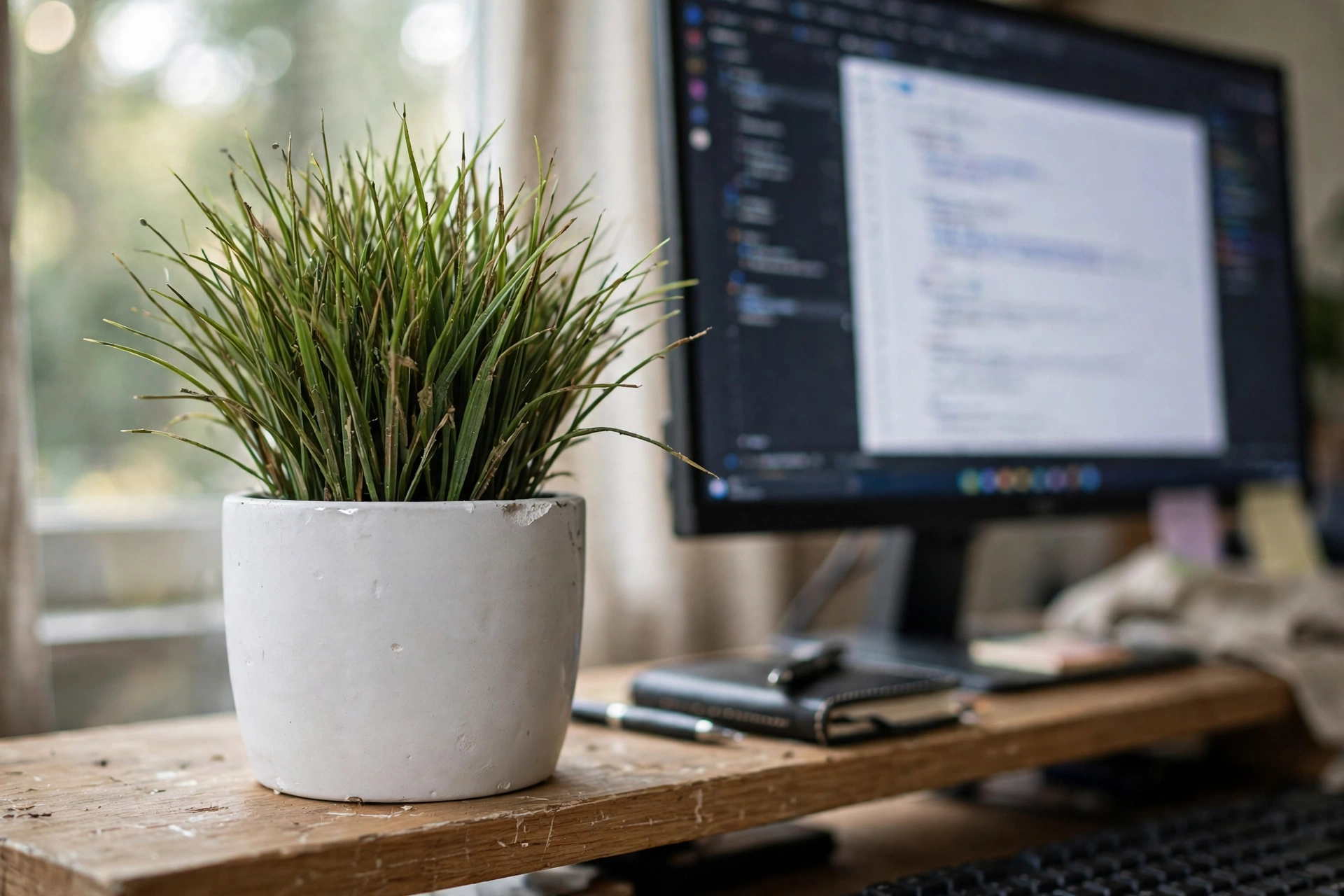
A good pot contains the mess. A solid ceramic pot with a stable base will not tip easily, and its weight keeps it steady when you brush past the desk. A faux grass plant in a white ceramic pot is a tidy choice for a shelf or a desk corner, since there is no soil to spill at all.
For real plants, fill the pot to about an inch below the rim so water and soil stay inside when you water. Top the soil with small stones or moss to stop soil from splashing out.
Why this one: the solid white ceramic pot is stable and tidy, and the faux grass needs no water or soil care.
Worth knowing: at 11 inches tall it suits a shelf or a desk corner better than a crowded desktop.
Step 6: Group Small Plants in One Tray

AI-generated image
One tray changes everything. Group three small plants in a single tray and any soil, water, or dropped leaf lands in the tray instead of on the desk. The tray also makes the group look intentional, like a small garden rather than three stray pots.
- Pick a tray with a low rim so the plants still get light.
- Line it with a wipeable mat for easy cleaning.
- Lift the whole tray to dust or water, instead of moving each pot.
A set of three small faux plants in matching gray pots is an easy way to start the group.
Why this one: three varied faux plants in matching gray pots group neatly in one tray with no watering needed.
Worth knowing: the paper pulp pots are light, so keep the group on a stable shelf rather than a desk edge.
Step 7: Run a Weekly Leaf and Soil Check
AI-generated image
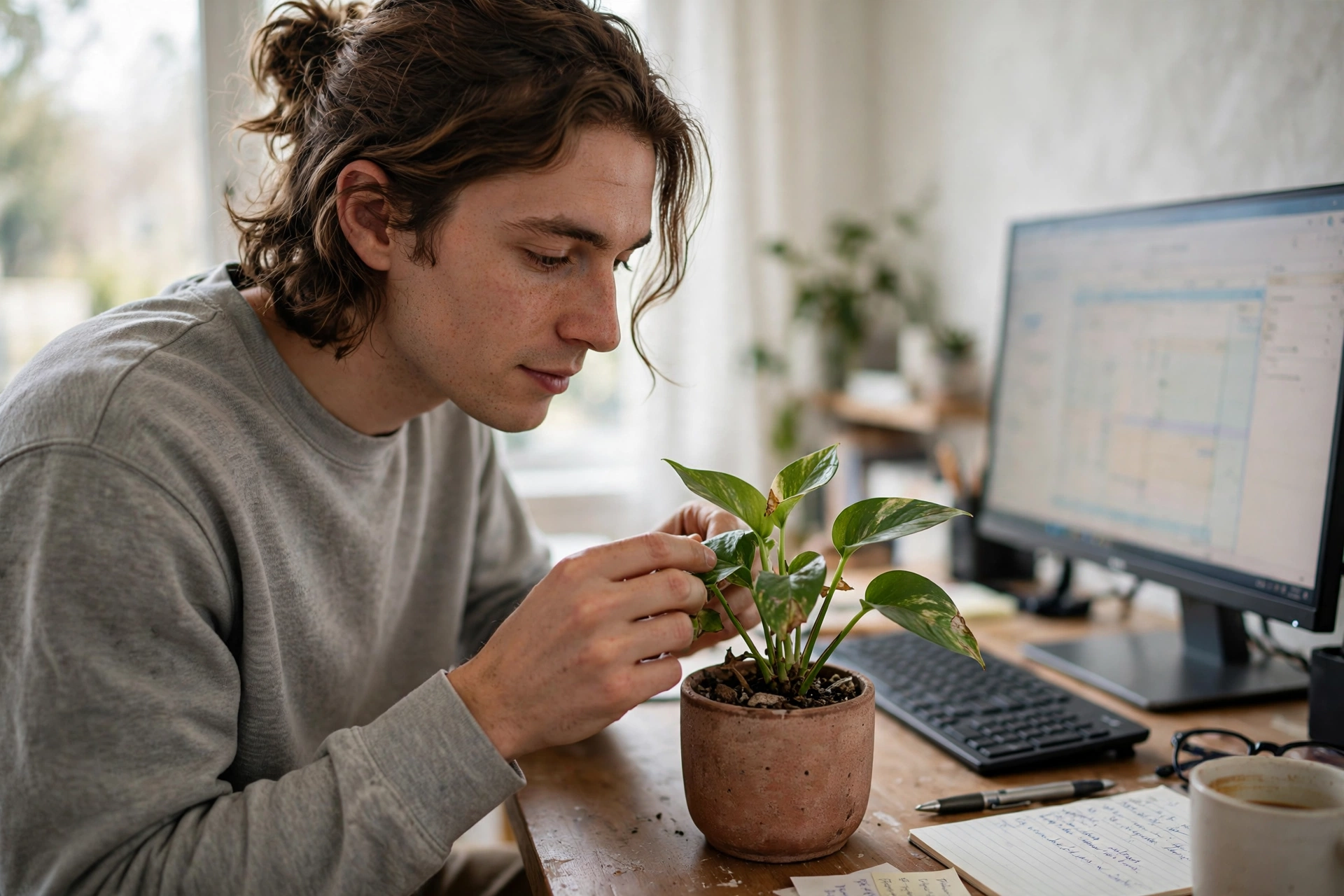
Plants stay tidy when someone checks them regularly. Once a week, look at each plant: remove dead leaves, check the soil with a finger, and wipe the leaves and the pot. For faux plants, a quick dusting is enough.
Keep a small kit nearby: a pair of snips, a cloth, and a dusting brush. When the tools are close, the weekly check takes five minutes and the plants always look cared for instead of neglected.
Frequently asked questions
Are faux plants a good choice for a home office?
Yes. Faux plants give you greenery with no watering, no soil, and no dropped leaves, which makes them the easiest mess free choice for a desk.
How do I water real plants without making a mess?
Carry the plant to the sink, water slowly, let it drain fully, and wipe the pot and saucer before carrying it back to the desk.
What size pot should I use for a desk plant?
Choose a pot only slightly larger than the root ball, and always pair it with a saucer wider than the pot so drips are caught.
Where should plants go in a small home office?
On a wall shelf, a window sill, or a desk corner in a tray. Keep pots off the main work surface so papers and keyboards stay clear.
How often should I check my office plants?
Once a week is enough for most plants. Remove dead leaves, check the soil, and wipe the pot and leaves during the same short session.
Conclusion
Adding plants to a home office does not have to mean soil on the desk. Start with faux plants, pick pots with saucers, move plants to a wall shelf, water at the sink, group small plants in a tray, and check them weekly. Those seven steps keep the green and leave the mess behind. For your next step, browse the Home Office Ideas category for setups you can copy whole.
