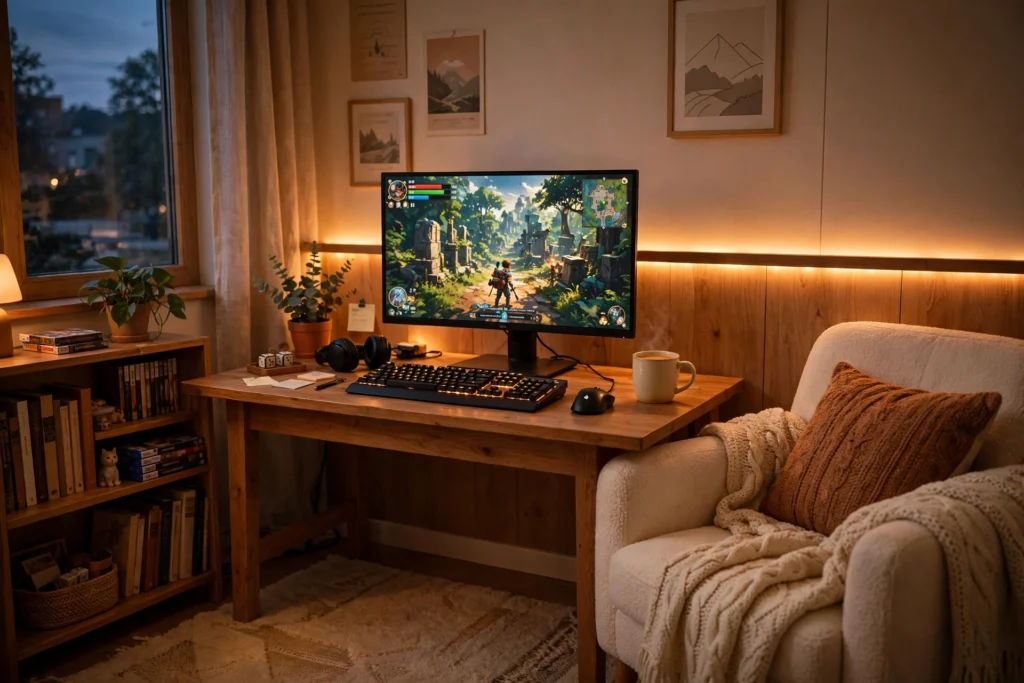
Gaming Room Ideas
A gaming room feels cold when it is all hard surfaces, one bright overhead light, and bare walls that bounce every sound back at you. It feels cozy when the light is warm and layered, the seat invites you to stay, soft textures break up the hard edges, and the room holds a few personal things instead of looking like a showroom. The good news is that coziness is not about spending more, it is about fixing the five things your senses notice first, light, touch, sound, warmth, and clutter. This guide gives you the direct answer first, then the evidence behind each fix, the trade-offs to watch for, and a verdict on where to start.
As an Amazon Associate I earn from qualifying purchases. Read our full affiliate disclosure for more detail.
In This Article
- The Short Answer
- 1. Layer Warm Light Instead of One Bright Light
- 2. Add Soft Textiles That Break Up Hard Surfaces
- 3. Bring In Warm Wood and Natural Materials
- 4. Soften the Sound So the Room Feels Quieter
- 5. Choose a Seat You Can Sink Into
- 6. Finish With Personal Touches and Controlled Clutter
- At a Glance Comparison
- Frequently Asked Questions
- Verdict
- Conclusion
The Short Answer
A gaming room feels cozy instead of cold when it has warm layered light, soft textiles, warm materials like wood, a comfortable seat, quieter acoustics, and a few personal items with the clutter under control. Start with light, because one cold overhead bulb is the single biggest reason a room feels like an office. Swap it for a warm desk lamp plus a warm LED strip behind the screen, then add a rug, a throw, and a chair you actually like sitting in. Those three moves change how the room feels in an evening, and they cost less than a new monitor. The rest of this guide walks through each factor with the evidence for why it works, the trade-offs, and the products worth buying when you want a shortcut.
1. Layer Warm Light Instead of One Bright Light
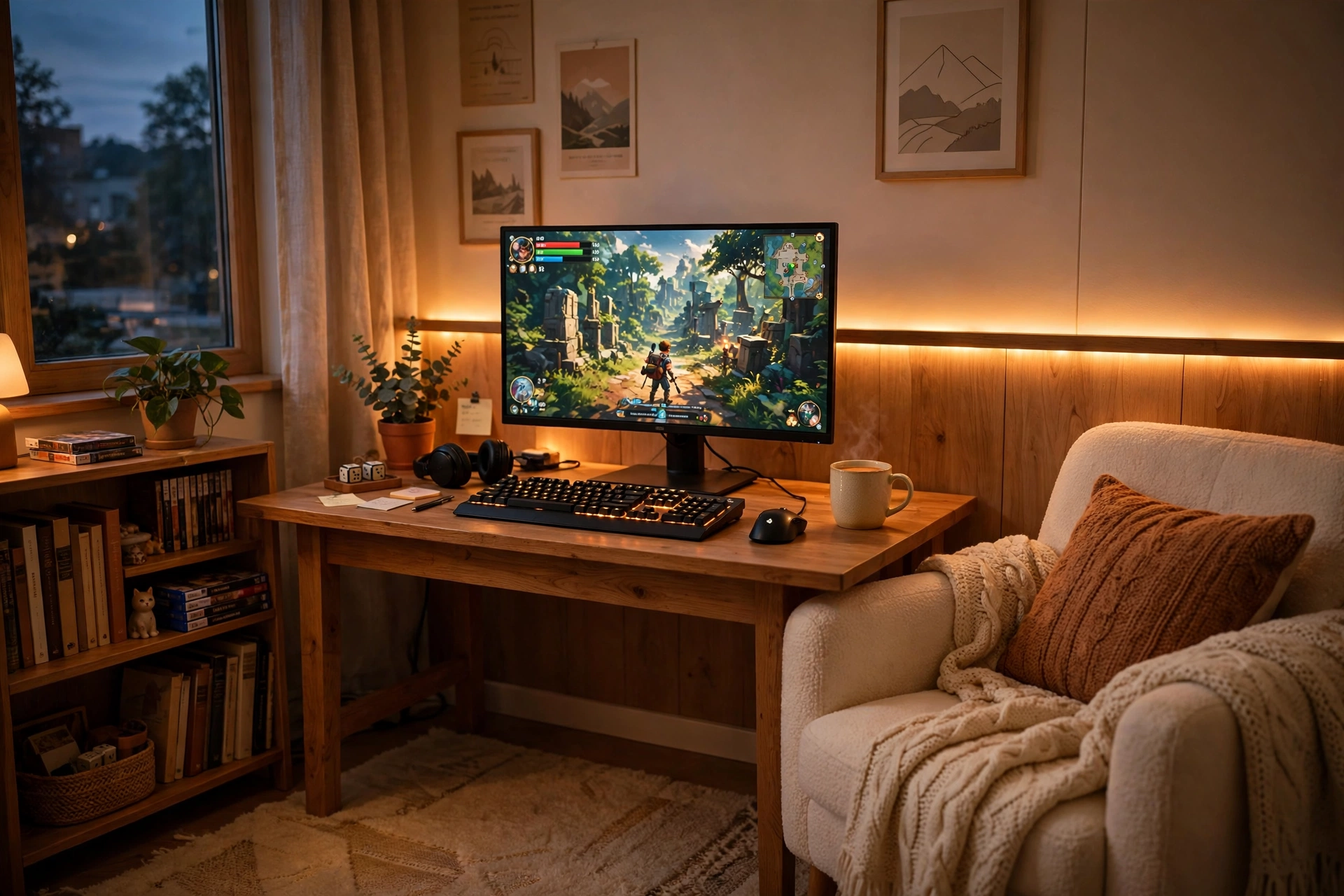
Cold rooms are usually lit from one place, a single ceiling light that throws hard shadows and makes every surface look flat. Warm rooms are lit from three places at low brightness, a desk lamp, a glow behind the screen, and a soft strip along a shelf or the wall. Warm light, around the color of late afternoon sun, tells your brain the room is a place to relax, while cool white light tells it to stay alert. The trade-off is real, though. Too much warm light makes a small room feel dim and sleepy, and a screen in a dark room strains your eyes, so keep one light on the desk for tasks and let the rest stay soft. Bias lighting behind the monitor is the easiest win here, because it softens the contrast between a bright screen and a dark wall, which is why the 7 bias lighting ideas for TV and monitor work so well in dark rooms. Set the strip to warm gold rather than rainbow mode, and the whole desk area will feel like a lamp-lit corner instead of a workstation.
Why this one: The warm gold setting gives the screen a soft halo against the wall, and app control makes it easy to dim for late night play without getting up.
Worth knowing: The adhesive can loosen over time on a warm TV or monitor back, so check it now and then and add clips if needed.
LIGHTACCENTS Traditional Bankers Desk Lamp with Green Glass Shade and Brass Base
Why this one: The green glass shade and brass base throw a focused pool of warm light across the keyboard, which is exactly the task light a cozy desk needs.
Worth knowing: It lights the desk well but adds little light to the rest of the room, so pair it with a strip or a second lamp rather than using it alone.
2. Add Soft Textiles That Break Up Hard Surfaces
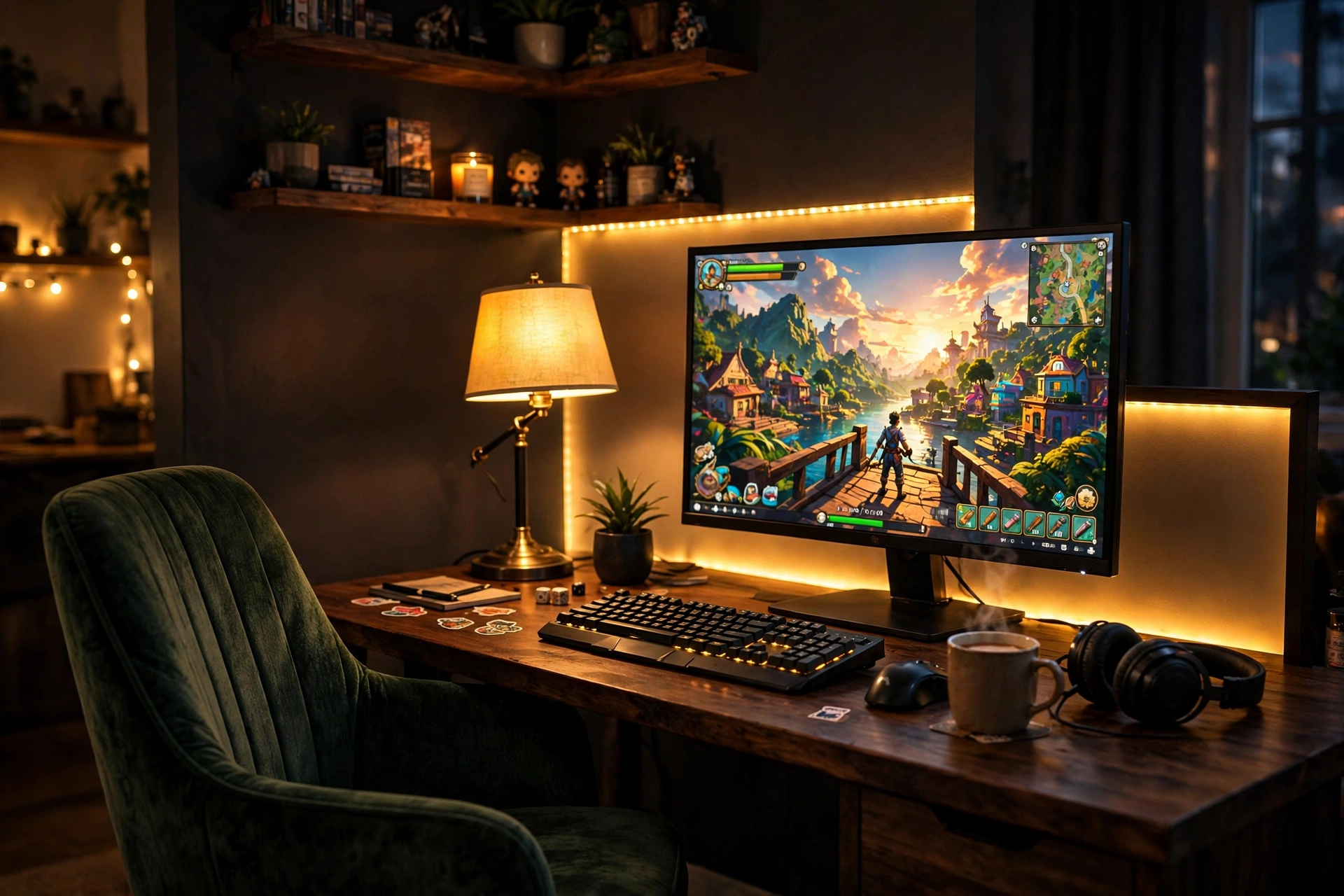
Desks, monitors, and bare floors are all hard, smooth, and cold to the touch, and a room full of them feels cold even when the heating is on. Textiles fix that faster than any gadget, because they change what your hands and feet meet. A rug under the desk and chair warms the floor and stops the chair from echoing on hard flooring, a throw over the chair back invites you to sit down, and curtains soften a bare window that would otherwise leak cold and glare. The evidence is simple to test in your own room, sit in it for ten minutes with a rug and a throw, then take them away, and the room will feel noticeably harder and louder. The trade-off is upkeep, because rugs and throws collect dust and pet hair, and a white rug in a gaming room will show every crumb. Pick a washable throw, a low pile rug in a mid tone that hides dust, and curtains you can pull back in the day so the room still gets daylight. If your room is tight, the 13 gaming room ideas for small bedrooms show how a single rug can define a small setup without crowding it.
3. Bring In Warm Wood and Natural Materials
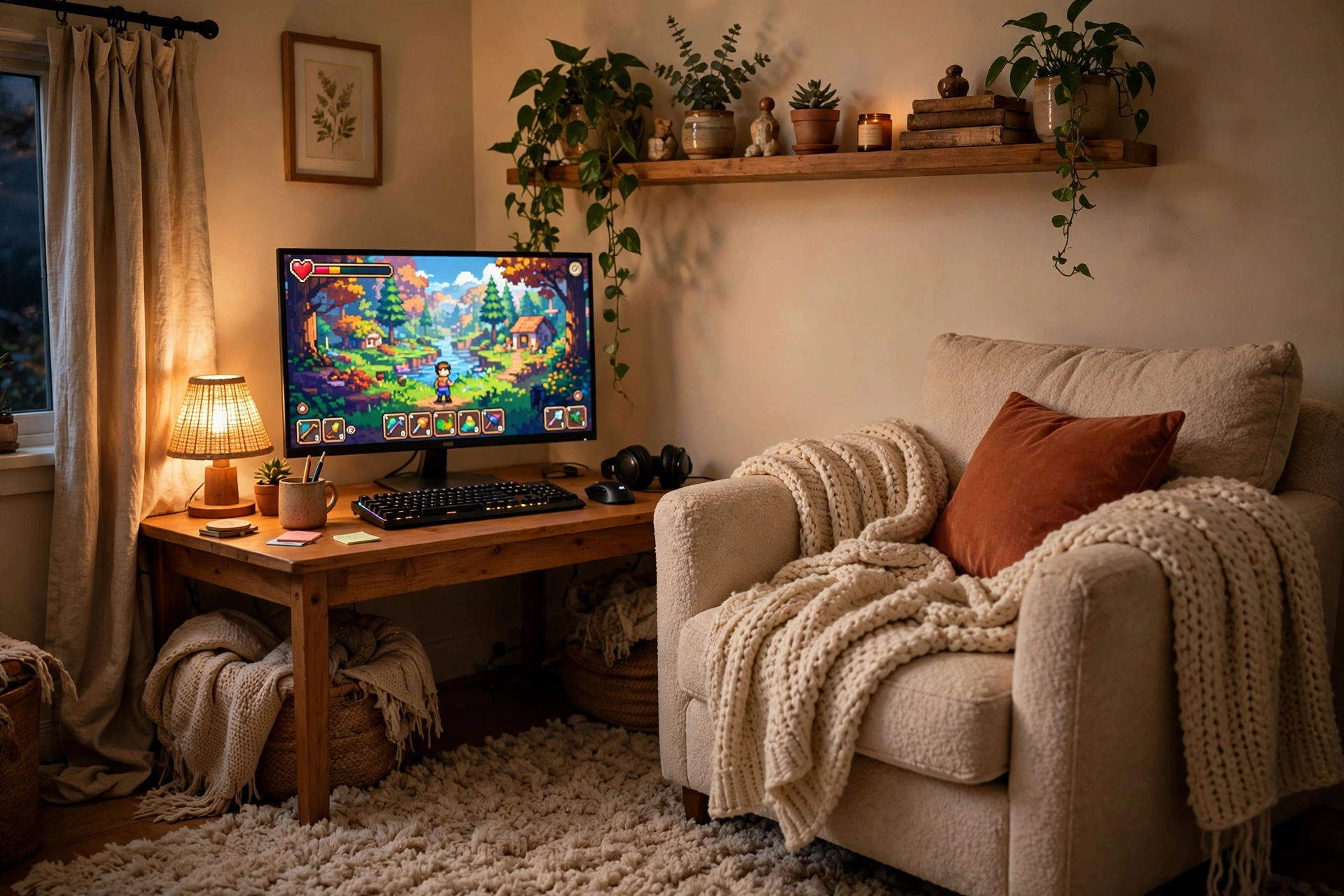
Black plastic, glass, and metal are the default materials of gaming gear, and a room built only from them reads as cold and technical. Wood changes that at a glance, because its grain and warm tone signal a lived-in room rather than a lab. You do not need to replace your desk to get the effect, a wooden shelf, a wooden monitor riser, a plant on the desk, or a cork board on the wall all add warmth without a rebuild. Plants help twice, they add a living green accent and they soften the straight lines of screens and shelves. The trade-off is that real wood needs a little care, it can scratch and it shows dust, and too many small wooden items can turn cozy into cluttered. Keep it to two or three warm pieces, a desk or shelf in wood, one plant, and one natural fiber basket for controllers, and let the rest of the room stay simple. A single wooden element near the screen does more than five scattered ones, because your eye lands on it every time you sit down.
4. Soften the Sound So the Room Feels Quieter
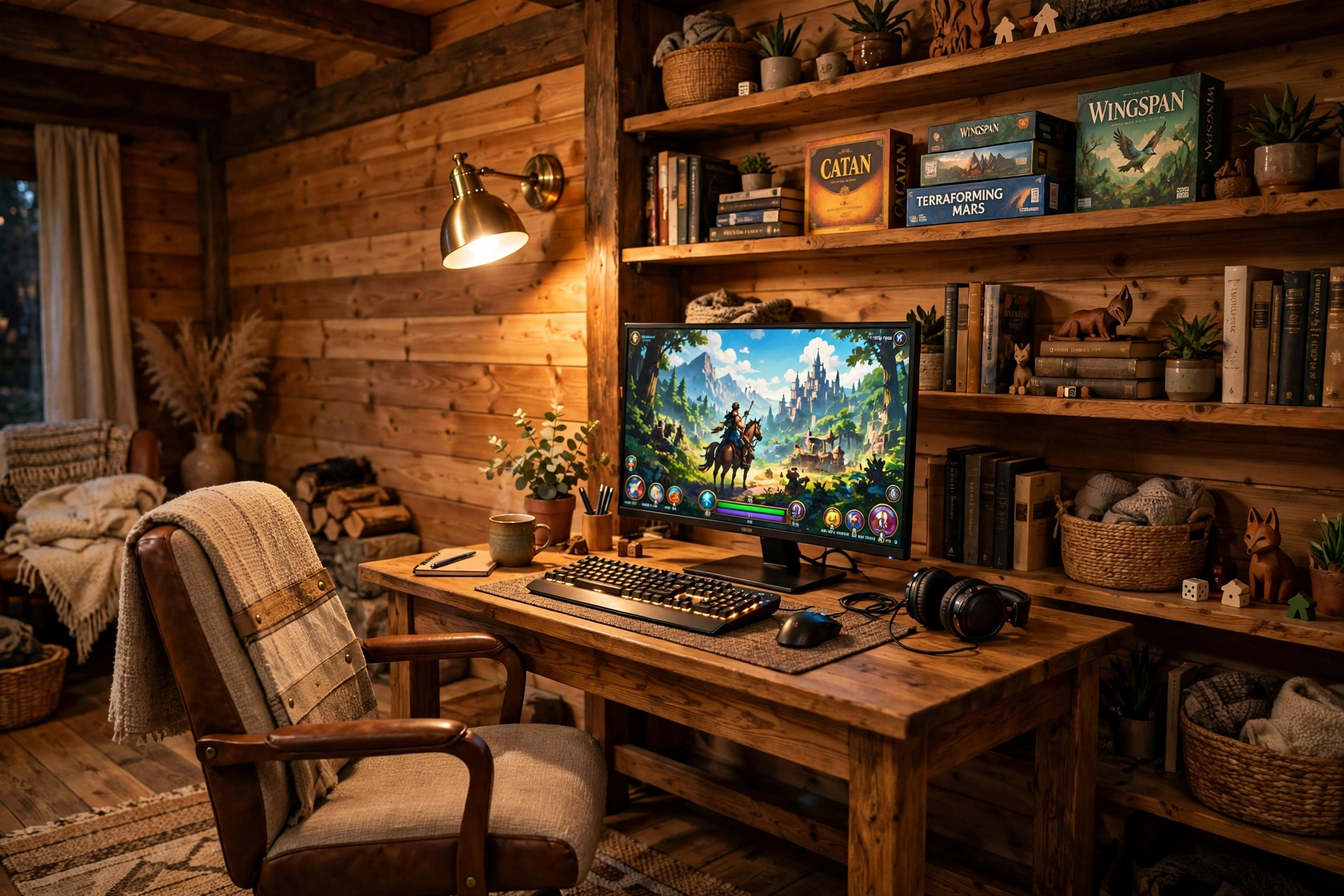
A cold room is often a loud room, even when nothing is playing. Bare walls, a bare floor, and a glass desk bounce every keyboard click and fan hum back at you, and that echo makes a room feel empty. Soft materials absorb that sound, which is why the rug, curtains, and throw from the earlier sections do double duty, they quiet the room as well as warm it. Fabric wall panels, a bookshelf full of games, and a padded chair all break up the echo further. The trade-off is that a very quiet room can feel closed in, and heavy acoustic foam on every wall looks like a studio rather than a home. You do not need foam everywhere, start with the rug and curtains, then add one bookshelf or two fabric panels on the wall behind you, and stop there. The goal is a room where your voice sounds normal and the game audio feels close rather than bouncing around, not a recording booth. If you stream or take calls in the room, this step also makes your microphone sound warmer, which is a bonus you will notice right away.
5. Choose a Seat You Can Sink Into
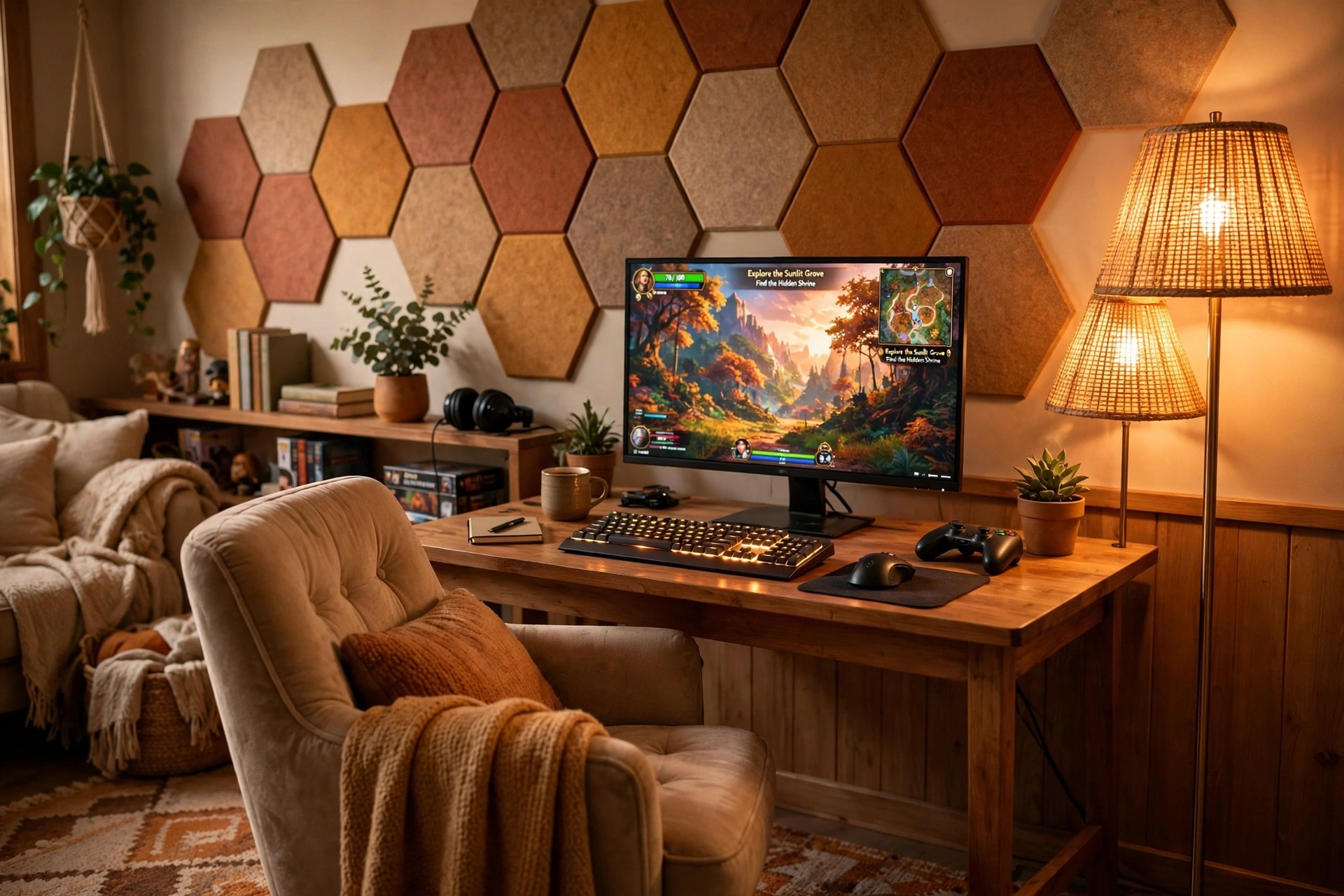
The chair is where coziness is decided, because it is the one thing you touch for hours. A hard plastic racing seat with sharp edges can look great in photos and still make a room feel cold, because it signals work, not rest. A velvet or fabric chair with a soft back, a cushion, and a throw over one arm signals the opposite, and it keeps you warmer during long sessions than a mesh or plastic seat. The trade-off is support, because a soft accent chair gives less back support than a proper task chair, and a chair that is too soft will leave you aching after a long night. The middle ground is a padded task chair in fabric or velvet, with adjustable height and a back you can lean into, plus a small cushion for your lower back. Sit in the chair before you commit if you can, and check that it slides under the desk, because a cozy chair that blocks the walkway will annoy you every day. Your seat should make you want to sit down, not just look good in the corner.
Lydia Tufted Velvet Upholstery Task Chair for Home Office, Green
Why this one: The tufted green velvet and gold metal legs give a cozy room its seat, and the compact task chair shape fits a desk setup without crowding the room.
Worth knowing: Velvet shows dust and pet hair easily, and it is a simple task chair, so it offers less support than a full ergonomic gaming chair for very long sessions.
Why this one: The cream velvet and gold legs match a warm palette exactly, and the tufted back adds a soft touch to a plain room.
Worth knowing: It has fixed legs with no height adjustment and no wheels, so check your desk height first.
6. Finish With Personal Touches and Controlled Clutter
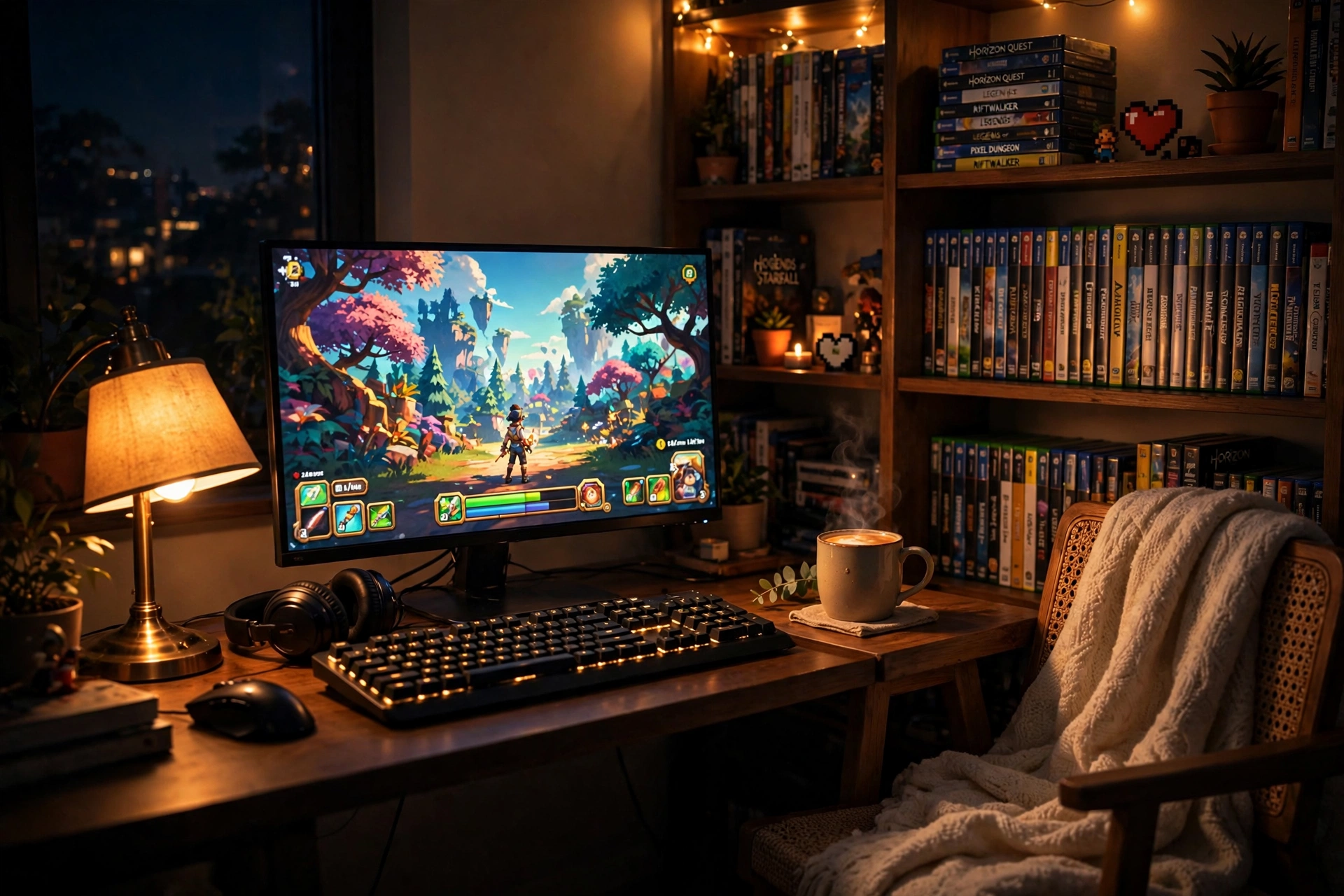
A room with nothing personal in it feels like a display, no matter how warm the light is. A few framed prints, your favorite games on a shelf, a mug you actually use, and a photo or two tell you the room belongs to someone, and that is what makes it feel like home. The trade-off is the line between personal and cluttered, because every extra object on the desk competes with the screen and makes the room harder to clean. The fix is to give personal things a home, games upright on one shelf, controllers on a hook or in a basket, cables in a tray under the desk, and the desktop kept to the screen, keyboard, and one or two small items. A cable tray is the quiet hero here, because hidden cables make even a busy desk look calm. For winter-specific ideas, the 9 cozy gaming room ideas for winter show how seasonal touches like a thicker throw and a warm drink station fit the same pattern. Add one personal thing at a time, live with it for a week, and keep only the ones you still notice and like.
Govee 16.4ft RGBIC LED Strip Lights, Work with Alexa and Google Assistant
Why this one: The RGBIC segments let different parts of the strip show different colors at once, so you can set a warm amber shelf glow and keep the desk area calm.
Worth knowing: It needs the app and a Wi-Fi connection for smart features, and the adhesive backing can peel on textured or dusty walls, so clean the surface first.
Why this one: The steel tray screws under the desk and holds the power strip and adapters out of sight, which is the fastest way to make a busy desk look calm.
Worth knowing: It attaches with screws, so it suits a wood or wood composite desk top and needs a drill for a clean install.
At a Glance Comparison
| Factor | What To Do | What To Avoid | Best For |
|---|---|---|---|
| Warm light | Lamp plus warm strip behind screen | One cold overhead bulb | Evening play |
| Soft textiles | Rug, throw, curtains | Bare hard floors only | Cold floors |
| Warm materials | Wood shelf, plant, basket | All black plastic and glass | Technical rooms |
| Sound | Rug, curtains, one bookshelf | Foam on every wall | Echoey rooms |
| Seat | Padded fabric or velvet task chair | Hard plastic seat only | Long sessions |
| Personal touches | Few framed prints, games on shelf | Clutter on every surface | Showroom rooms |
Frequently Asked Questions
What is the cheapest way to make a gaming room feel cozy?
Change the light first. Turn off the cold overhead bulb, add a warm desk lamp and a warm LED strip behind the screen, then add a rug and a throw you already own. Those moves change how the room feels the same evening, and they cost less than a new piece of gear.
Does RGB lighting make a room feel cold?
It can, when it is set to bright blue or rainbow mode at full brightness. Set the strips to warm amber or gold and dim them, and the same lights feel warm instead of clinical. Keep one warm white light on the desk so the room never depends on colored light alone.
How do I make a small gaming room cozy without crowding it?
Pick one rug, one throw, and one warm lamp, and give everything else a home off the desk. A small room feels cozy when the floor is soft and the desk is clear, and it feels crowded when every surface holds something. Measure first, then add one piece at a time.
Can a gaming room be cozy and still look good on camera?
Yes, and warm layered light helps on camera too, because it softens shadows on your face. Keep the bright key light for streaming, but let the warm lamp and strip set the mood behind you, and keep the background to a shelf and one or two personal items.
What should I fix first if my room feels cold and echoey?
Fix the floor and the walls together. A rug under the desk and curtains on the window cut both the cold feeling and the echo, because soft materials absorb sound and warm your feet at the same time. Add a bookshelf next if the echo is still there.
Verdict
Start with light, then textiles, then the seat. Warm layered light is the highest impact change, a rug and a throw are the cheapest, and a padded fabric chair is the one you will feel every session. Skip the full rebuild, and skip buying everything at once. Add the lamp and strip this week, live with them for a few evenings, then add the rug and the chair. If you only do one thing, do the light, because a warm lit room with a plain chair still feels cozy, while a cold lit room with an expensive chair still feels like an office.
Conclusion
A cozy gaming room is a system, not a shopping list. Warm light sets the mood, soft textiles warm the touch and quiet the sound, wood and plants warm the look, a good seat keeps you there, and a few personal things with the clutter under control make it yours. Build it in that order, one change at a time, and your room will feel like a place to settle in every time you sit down, not just on the day you finish decorating it.
