
Why Natural Light Matters in a Home Office
Daylight changes how a home office looks and feels. It makes colours look true, it keeps the room bright without a ceiling light, and it gives the day a rhythm as the light moves across the desk. This guide shows how to place your desk, control glare and use the daylight you already have. Browse more room ideas in the Home Office Ideas collection on desk and glow.
As an Amazon Associate I earn from qualifying purchases. Read our affiliate disclosure for details.
In this guide
1. Find where the light falls
2. Place the desk
3. Tame the glare
4. Keep the window clear
5. Balance daylight with a lamp
6. Use light colours and surfaces
7. Follow the light through the day
FAQ
Conclusion
At a glance
| Step | What it does |
|---|---|
| 1. Find where the light falls | Maps the light in your room through the day |
| 2. Place the desk | Puts the desk where daylight helps most |
| 3. Tame the glare | Stops bright sun washing out the screen |
| 4. Keep the window clear | Lets the full window do its work |
| 5. Balance daylight with a lamp | Fills the desk when daylight fades |
| 6. Use light colours and surfaces | Bounces daylight further into the room |
| 7. Follow the light through the day | Adjusts blinds and lamps as the sun moves |
Step 1. Find where the light falls

Watch your room for a day before you move anything. Note when the sun reaches the window, how far the light travels across the floor, and when it leaves again. A south facing window brings strong light for much of the day, while a north facing one gives softer light that changes less. Take a photo at morning, midday and late afternoon, so you can compare the three. This simple record tells you where the desk should sit and where the glare will appear, instead of guessing and moving furniture twice.
Step 2. Place the desk

The best desk spot is usually beside the window, not in front of it and not with your back to it. Try these positions in order:
- At a right angle to the window, light coming from your side.
- Facing the window, if the sun never shines straight in.
- Facing into the room, with the window to one side.
- Against the far wall, only if the room is very small.
Sit at the desk in each spot and look at the screen. If the screen stays clear and the desk feels bright, you have found the place. If you squint or shade the screen with your hand, try the next spot.
Step 3. Tame the glare
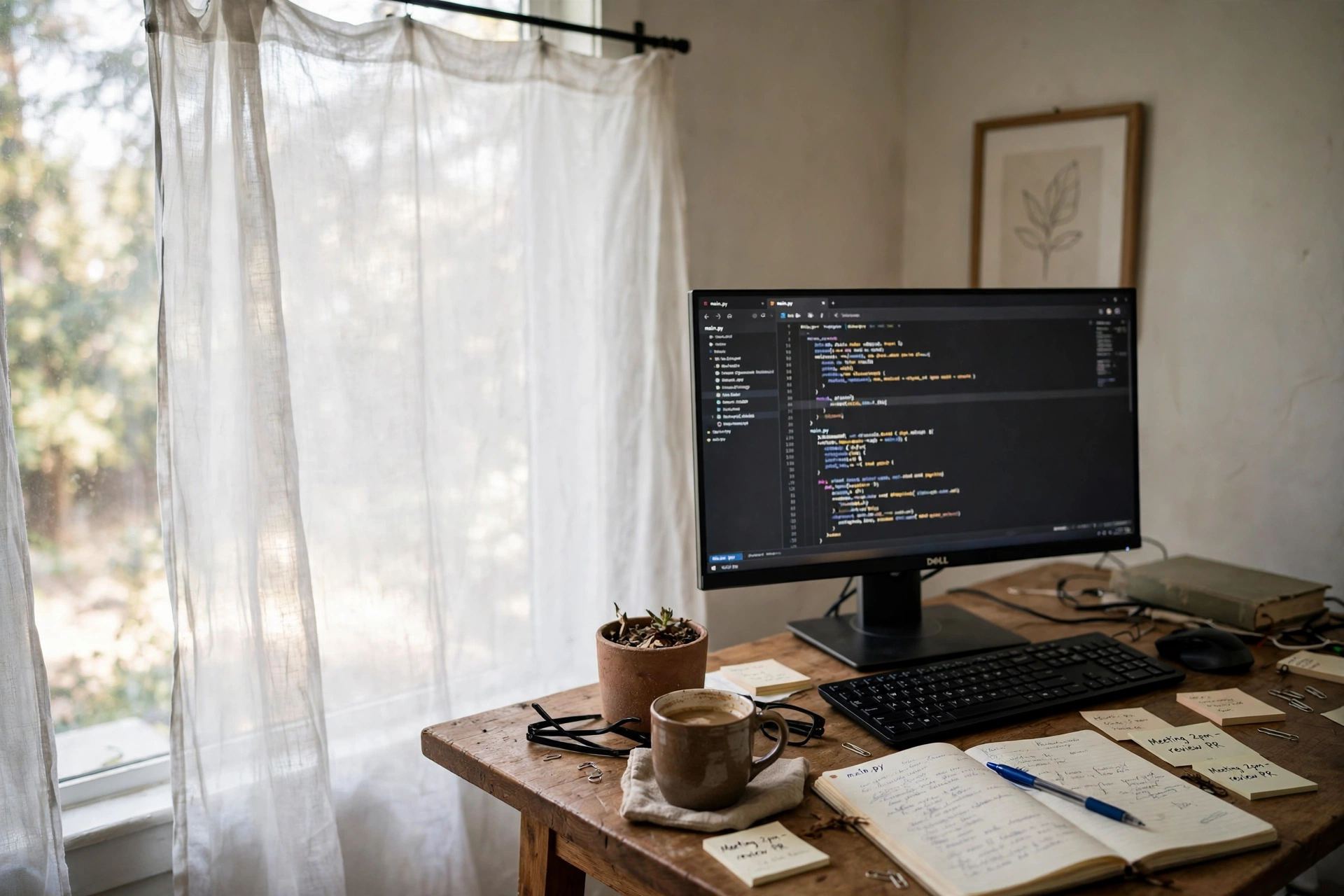
Glare is the main problem with a bright window, and it has simple fixes. A sheer curtain softens direct sun without blocking the light, and a blind tilted slightly upward sends light toward the ceiling instead of onto the screen. Tilt the monitor a few degrees, move it an inch or two to the side, or turn its brightness up a notch so the screen holds its own against the window. Avoid putting a mirror or a glossy frame opposite the window, because it throws the light straight back at you. The goal is bright light in the room and a calm screen, not a dark room.
Our pick: BenQ ScreenBar Pro LED Monitor Light Bar, Silver
Why this one: The bar lights the desk from above the screen without shining onto it, which helps on dull days and in the evening.
Worth knowing: It needs a USB-C power source and a monitor edge it can clamp onto, so check the fit first.
Step 4. Keep the window clear
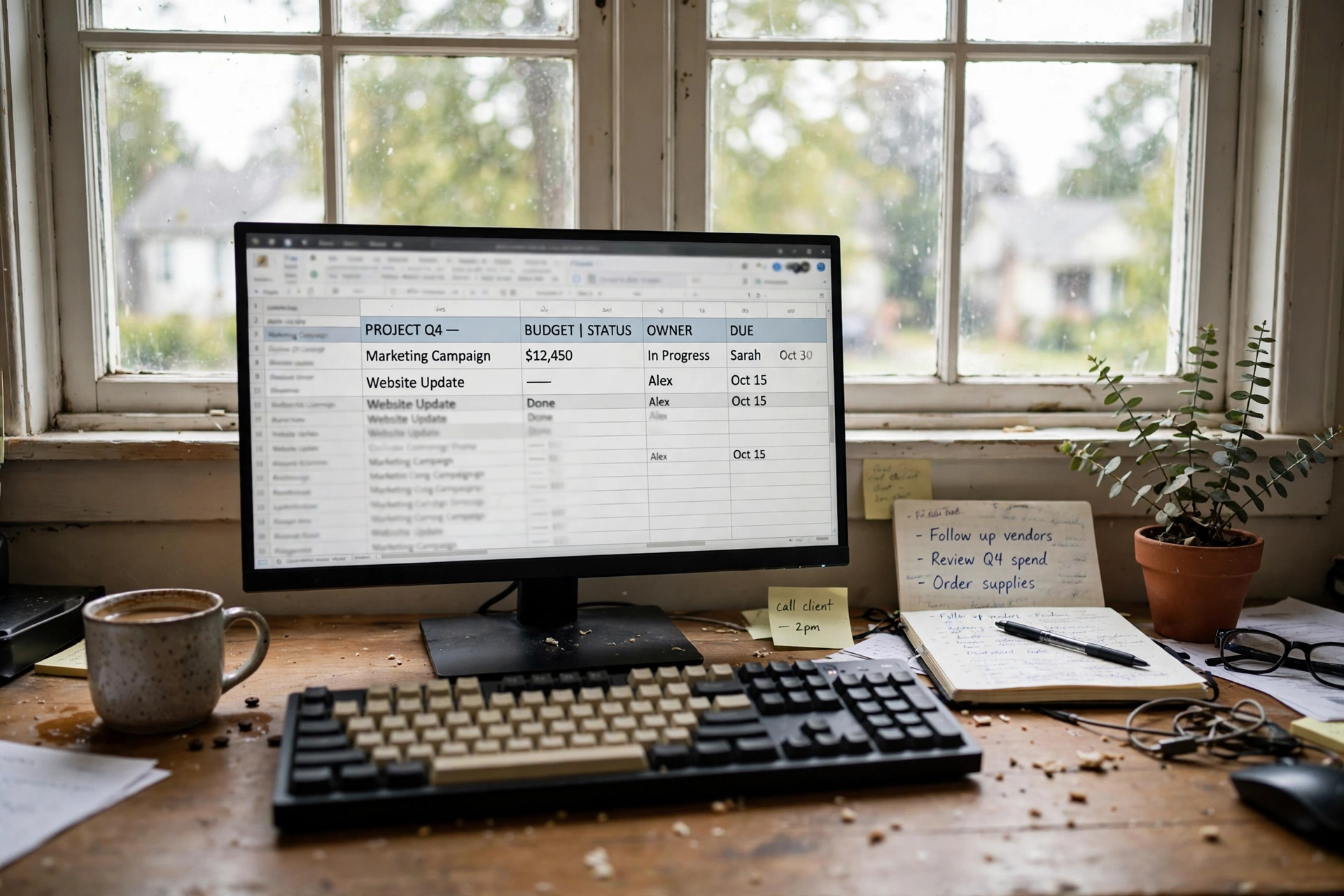
A window only works if light can pass through it. Wash the glass inside and out, clean the sill, and pull heavy curtains right back so they do not cover the edges of the glass. Move tall plants, stacked books and storage boxes away from the window, and keep the sill clear except for one small plant that likes the light. If the outside of the window is blocked by a fence or a hedge, trim what you can and accept the softer light that remains. A clear window can make the same room feel larger, because your eye travels further.
What works here: clean glass, curtains pulled fully aside, and a clear sill. What to skip: dark heavy drapes that stay half closed all day, and tall furniture pressed against the glass.
Step 5. Balance daylight with a lamp
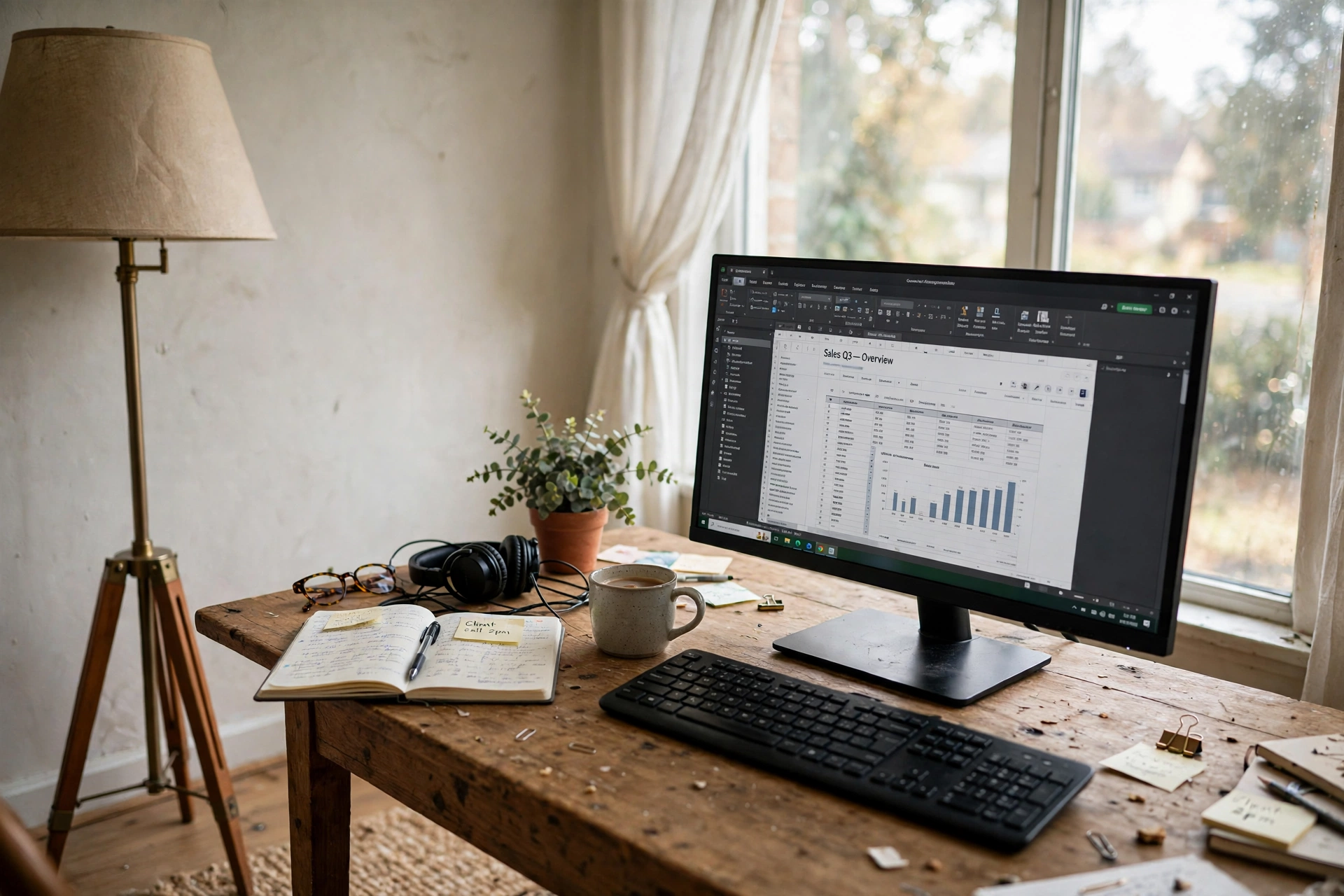
Daylight fades in the afternoon and disappears in winter, so a lamp takes over. Place it on the opposite side of the desk from the window, so the two light sources balance each other instead of fighting. A floor lamp with an adjustable arm can wash light across the desk and the wall behind it, which keeps the room bright without a harsh spot. Turn the lamp on before the room goes dark, not after, so your eyes adjust slowly. Use a warm white light in the evening, and keep the lamp out of the camera frame if you take video calls.
Our pick: Brightech Leaf Pharmacy LED Floor Lamp, Antique Brass
Why this one: The adjustable arm swings over the desk, so you can point the light where the daylight has faded.
Worth knowing: It is a tall floor lamp, so it needs clear floor space beside the desk and is not a desk lamp.
Step 6. Use light colours and surfaces

Light colours bounce daylight further into a room, while dark colours soak it up. A pale desk top, a light rug and white or cream walls all help the window light travel. You do not need to repaint the whole room: a light desk mat, a pale cushion or a white shelf can lift a dark corner. Keep glossy surfaces to a minimum, because they reflect the window as a bright patch instead of spreading the light. Matte paint, light wood and soft fabric spread daylight gently, so the room feels bright without glare.
- Pale desk top or a light desk mat.
- White or cream walls near the window.
- Light rug under the desk and chair.
- Matte finishes, not glossy ones.
Step 7. Follow the light through the day
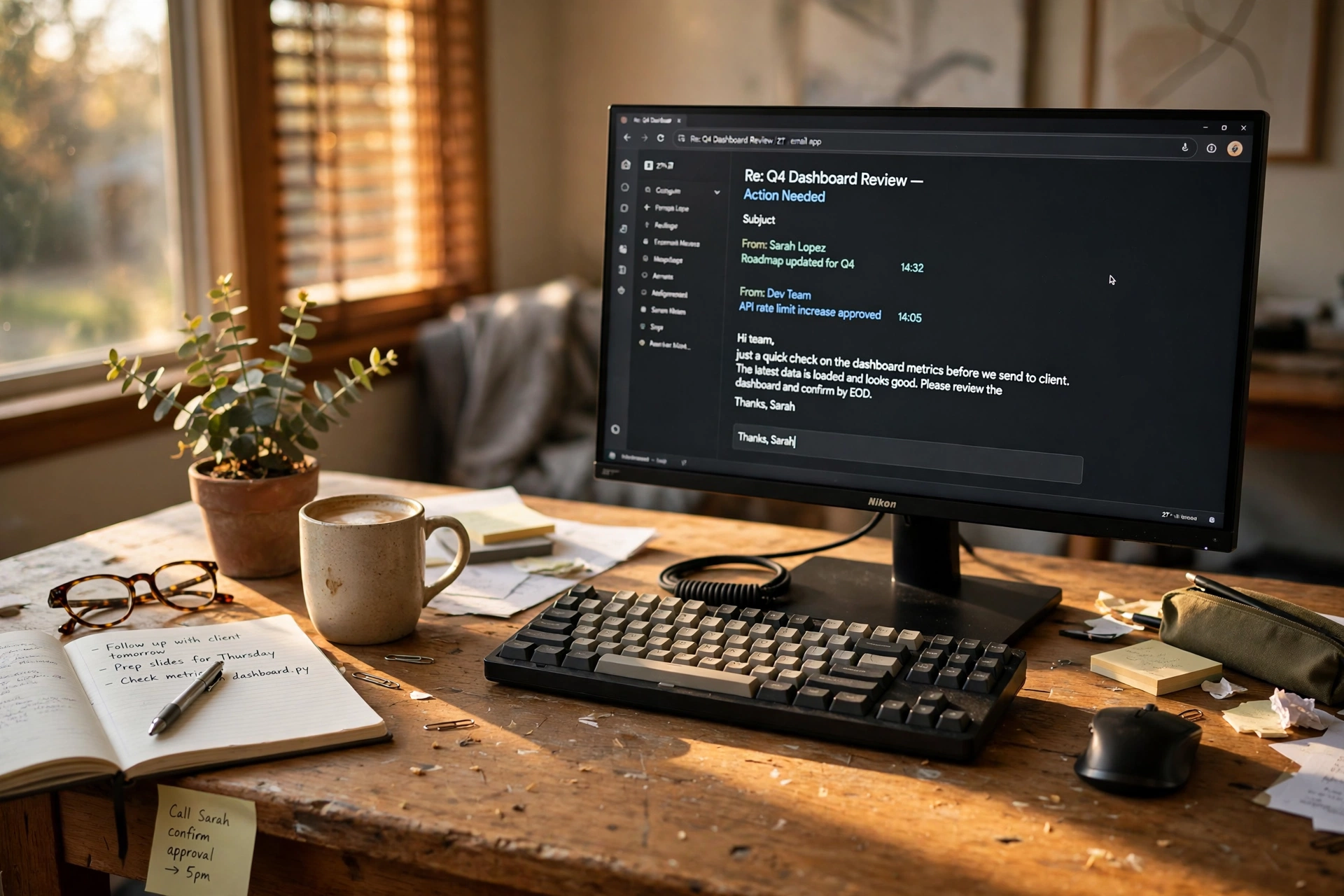
The light in a room is never fixed, so your setup should not be either. Open the curtains fully in the morning, lower the blind a little when the sun hits the screen at midday, and switch the lamp on as the light fades. In summer the sun moves higher and faster, in winter it stays low and can shine straight in for longer, so check the room again when the season changes. A two minute adjustment each morning is enough to keep the desk bright and the screen clear, and it turns daylight into a habit rather than a one time fix.
Frequently asked questions
Where should a desk sit for the best natural light?
Beside the window, at a right angle to it, so daylight falls across the desk without shining straight onto the screen or into your eyes.
How do I stop glare on my monitor?
Use a sheer curtain or a tilted blind, move the monitor a few inches to the side, and avoid mirrors or glossy frames opposite the window.
What if my office has no window?
Use light colours, a lamp that washes light across the desk and the wall, and keep the door open when you can so light from the next room reaches in.
Should I face the window or sit with my back to it?
Facing the window can work if the sun never shines straight in. With your back to it, the screen stays clear but your face falls into shadow on video calls.
Do light colours really help?
Yes, in a small way that adds up. Pale walls, a light desk top and a light rug bounce daylight further into the room instead of absorbing it.
Conclusion
Natural light matters because it shapes how your office looks, how clear your screen stays, and how the room changes through the day. Find where the light falls, place the desk beside the window, tame the glare, keep the glass clear and balance the evening with a lamp. For more ideas to shape the rest of your workspace, browse the Home Office Ideas collection.
